M S Nazki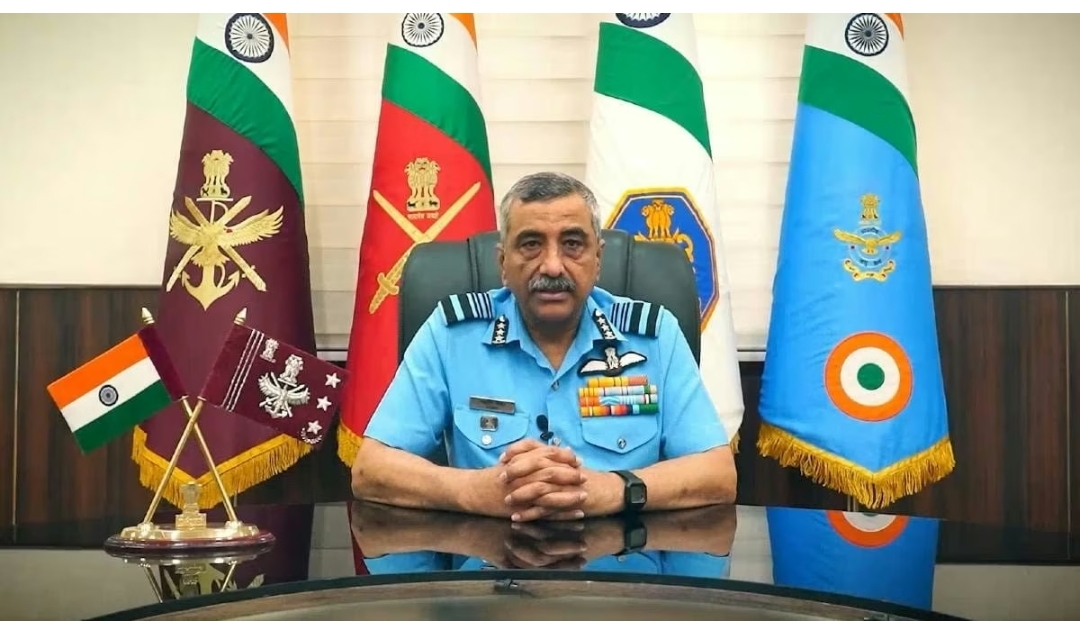
By M S Nazki
Flying isn’t dangerous. Crashing is what’s dangerous. Every takeoff is optional. Every landing is mandatory. Never let an aircraft take you somewhere your brain didn’t get to five minutes earlier!………..!
-So as usual I will start with a story!
-I was a bachelor then and Sani (daughter of an air force officer! At that time glider flights in the evenings were permitted in J&K! That day I was in Usmaan club in Jammu Cantt! There were not many restrictions as they are of today! I along with Brij (Later on became a naval officer were at the swimming pool! But before that I played table tennis with Sani (Saaniya, her actual name)! Harder I served, the stronger she hit the ping pong ball) I tried spin but she hit even harder! It was a game, set and match for Sani! I’m off to the airfield! Mind you, you have lost Rupees ten on the table! I told her to take the ten bucks! She did not…………… Now she is alive and married……….But the ten bucks she never tookbut instead gave me………I do not want to talk………she gave be 20 Lakhs with a note…..That time was different and this time is different!,,,,,,,,,,,,,,,,
-Now to the story proper:
-Air Marshal Ashutosh Dixit said atma nirbharta (self-reliance) in defence cannot be just about making weapons in India.
-Emphasising on the importance of technological sovereignty, Air Marshal Ashutosh Dixit said atma nirbharta (self-reliance) in defence cannot be just about making weapons in India.
-Air Marshal Dixit, who is Chief of Integrated Defence Staff, said that atma nirbharta is about controlling the architecture and software of systems, among other things, because without control, the country will be dependent on others at the worst possible moments.
=The officer also spoke about the theaterisation of the Indian armed forces and said that over 90% agreement has been reached on the same.
-CISC Air Marshal Dixit sums up Op Sindoor lessons—traditional battlefield ideas ‘irrelevant’
CISC Air Marshal Ashutosh Dixit says modern surveillance must allow the military to detect, track & identify threats while still in staging areas, airfields or bases deep in enemy territory.
- Traditional battlefield concepts such as frontlines, depth areas, and rear zones are no longer relevant in an era defined by long-range precision strikes and real-time surveillance, Chief of Integrated Defence Staff (CISC) Air Marshal Ashutosh Dixit said!
“When weapons can strike targets hundreds of kilometres away with pinpoint accuracy, the classical ideas of front, rear, and flanks become irrelevant. The front of the theatre merges into one,” he said. “This new reality demands that we extend our surveillance envelope far beyond what previous generations could have imagined.”
-Speaking at a seminar on surveillance and electro-optics, jointly organised by the Centre for Air Power Studies (CAPS) and Indian Military Review (IMR) in the national capital, he emphasised that modern surveillance capabilities must now allow the military to detect, track and identify threats while they are still in staging areas, airfields or bases deep within adversary territory.
=“This existed as a concept earlier, but today we have the means to realise it,” he said.
Speaking on the achievements of Operation Sindoor, he said, “The operation had clearly demonstrated that indigenous innovation, when properly harnessed, can match and even exceed international benchmarks.”
-He added that at the core of the success was IAF’s Integrated Air Command and Control System (IACCS), which was also synced and integrated with the Army’s Akashteer system, providing a joint and integrated approach to the air defence of the nation.
-“In modern warfare, information without the ability to act upon it rapidly is of limited value. IACCS compressed our sensor-to-shooter timelines dramatically, enabling responses that outpaced adversary decision cycles,” said Air Marshal Dixit.
- “The result was clear—not a single Pakistani aircraft breached our airspace, while our precision strikes successfully degraded their AD capabilities and aerial infrastructure. This success was not accidental but the result of years of indigenous development, rigorous testing and continuous refinement and demonstrated the importance of self-reliance in national security.”
-“Operation Sindoor demonstrated how modern warfare has fundamentally altered the relationship between distance and vulnerability. Precision-guided munitions like SCALP, BrahMos etc., as well as beyond visual range air-to-air and supersonic ground-attack missiles, have rendered geographical barriers nearly meaningless.”
-He added, “When hypersonic missiles travel hundreds of kilometres in minutes, and drone swarms reach targets before decisions can be made, real-time or near-real-time surveillance becomes not just helpful, but critical for survival.”
-Citing contemporary conflicts, Air Marshal Dixit pointed out that the side with superior situational awareness consistently holds the upper hand on the battlefield.
-He further highlighted the foresight of the Indian Space Research Organisation (ISRO) and Defence Research & Development Organisation (DRDO) in enabling private sector participation, especially through the transfer of Optical Imaging System technology.
-“This has already resulted in compact, long-range surveillance platforms that increase operational flexibility. I urge companies to see themselves not just as vendors, but as partners in national security,” he said.
-Looking at the future, he added that India’s existing MALE (Medium Altitude Long Endurance) and HALE (High Altitude Long Endurance) platforms, and MQ-9, Rustom and TAPAS unmanned aerial vehicles, must evolve with modular payloads, advanced sensor fusion and artificial intelligence-assisted analysis to provide battlefield commanders with timely, actionable intelligence.
-Lt Gen Vineet Gaur, director general (capability development), who was also present at the event highlighted that, of the 52 spy satellites that India is expected to launch in the coming years, 31 will be built by private sector firms.
-“This marks a shift in our approach to defence modernisation, one that is faster, more agile and more collaborative with the private industry,” he said. “These satellites will be equipped with cutting-edge camera lenses, advanced sensors and a suite of modern technologies to enhance India’s situational awareness and defence preparedness.”
-He also emphasised the prioritisation of underwater surveillance, especially in light of Chinese naval activity in the Indian Ocean Region (IOR). “Our electro-optical platforms must be all-weather and all-domain. Cyber resilience and a common data language are also key for interoperability.”
-Air Vice Marshal Tejpal Singh, assistant chief of air staff (plans), who was also part of the panel, emphasised the critical role of advanced surveillance and technology in modern warfare. He further noted that enhanced battlefield imagery and robust monitoring systems have become essential to operational effectiveness.
-“We need to integrate our surveillance systems in the same way our air defence systems are integrated. Only then can we achieve true synergy and interoperability,” he said.AI Overview
The theaterisation of the Indian Armed Forces is a major military reform to integrate the Army, Navy, and Air Force under unified, geographically-defined commands. Led by the Chief of Defence Staff (CDS), this plan seeks to enhance joint combat capability, streamline decision-making, and optimize resource usage. Key commands are being established to counter specific threats (e.g., China and Pakistan)…………
-Key Aspects of Indian Theaterisation:
-Structure: It replaces the current service-specific commands with integrated, geographically defined theatre commands.
-Command Structure: The proposed model features a National Theatre Command (NTC) under the CDS.
-Major Theatres: Plans include dedicated commands for the western front (Pakistan), northern front (China), and maritime operations.
-Current Status: As of early 2026, the plan is in advanced stages, with nearly 90% of the groundwork completed, following a cautious, phased implementation approach.
-Objectives: The goal is to move beyond the current stovepiped system to a joint structure, enhancing efficiency against modern, multi-domain threats.
-Increased Synergy: Improved coordination during operations.
-Optimal Resource Use: Better distribution of assets, avoiding duplication of services.
-Faster Response Time: Faster, more centralized decision-making for operations.
-About Air Marshal Ashutosh Dixit. PVSM AVSM VM VSM
-Chief of Integrated Defence Staff
-Air Marshal Ashutosh Dixit, PVSM, AVSM, VM, VSM is an officer of the Indian Air Force, currently serving as the Chief of Integrated Defence Staff. He was previously the Air Officer Commanding-in-Chief, Central Air Command, and earlier served as the Deputy Chief of the Air Staffand the Senior Air Staff Officer, South Western Air Command.
- Early life and education
He is an alumnus of National Defence Academy, Pune and the Air Force Academy, Dundigal. He is also an alumnus of Defence Services Staff College, Bangladesh and National Defence College and National Defence College, New Delhi.
-Military Career
Dixit was commissioned as a fighter pilot in the Indian Air Force on 6 December 1986 from the Air Force Academy, Dundigal.
In a career spanning more than 37 years, he has held several field and staff appointments. He is an experimental test pilot and qualified flying instructor with more than 3300 hours of flying experience on a variety of aircraft in the IAF inventory and has participated in Operation Rakshak & Operation Safed Sagar during the Kargil War.
As a Commanding Officer, he re-equipped one of the Squadrons of Indian Air Force with the Mirage aircraft and later commanded a front-line fighter air base in the Western Sector and a premiere fighter training base in the Southern Sector.
He has flying experience primarily on Mirage 2000. He served as the Commanding officer of No. 9 Squadron and the Flying Training School in Bengaluru. He was also a Directing Staff at the Air Force Test Pilots School.
As Air Commodore, he served as the Principal Director for Air Staff Requirements at the Air Headquarter, New Delhi and later served as the Air Officer Commanding of Air Force Station Bidar, Karnataka.
As Air Vice Marshal, he served as the Assistant Chief of Air Staff, Air Headquarter, New Delhi. Later, he served as the Air Defence Commander of the Southern Air Command, Trivandrum and Assistant Chief of Air Staff, Plans at the Air Headquarters, New Delhi.
After being promoted to the rank of Air Marshal in October 2021, he served as the Senior Air Staff Officer, South Western Air Command till 14 May 2023.
On 15 May 2023, he took over as the Deputy Chief of the Air Staff from Air Marshal Narmdeshwar Tiwari. As the Deputy Chief of Air Staff in Air Headquarters, Dixit played a critical role in pushing forward the Aatma Nirbharta (self-reliance) initiative of the defense forces.
He has headed several projects with the adaption of future technologies and worked towards ensuring that the IAF achieves modernization while maintaining a steady focus on ‘Aatmanirbharta Self Reliance.
A number of indigenous aircraft projects including LCA Mark-1A, Mark-2 and AMCA have seen significant forward movement during his tenure as Deputy Chief.
On 1 September 2024, Air Marshal Dixit took over as the Air Officer Commanding-in-Chief, Central Air Command succeeding Air Marshal Ravi Gopal Krishana Kapoor who superannuated from service on 31 August 2024. He relinquished the command of Central Air Command on 30 April 2025.
On 1 May 2025, Ashutosh Dixit took over as the Chief of Integrated Defence Staff succeeding Lieutenant General Johnson P Mathew, who superannuated on 30 April 2025.
-Atmanirbharta in defense:
Atmanirbharta in defense is a comprehensive approach focused on achieving technological sovereignty and strategic autonomy, rather than just shifting assembly lines to India. True self-reliance necessitates indigenous R&D, designing advanced systems, controlling critical technology stacks, and fostering a robust ecosystem that includes private players, startups, and academia.
Key aspects of a comprehensive Atmanirbharta, according to recent developments, include:
-Technological Sovereignty: Moving beyond licensing and assembling foreign weapons to designing, developing, and owning the intellectual property of weapon systems, particularly in critical and emerging technologies.
-A “Whole-of-Nation” Approach: Involving the private sector, academia, and research institutions to build a self-sustaining ecosystem, rather than relying solely on Defence Public Sector Undertakings (DPSUs).
-Integrating Modern Warfare Domains: Focusing on multi-domain operations (MDOs) that cover cyber, space, electronic warfare, and AI-driven platforms, rather than just conventional land/air/sea systems.
-Strategic Autonomy: Reducing import dependence—which currently stands around 60-70%—to ensure that foreign suppliers cannot hinder India’s national security interests during conflicts, thus strengthening strategic autonomy.
-Phased Indigenization and Quality: Implementing positive indigenization lists for components and weapons, while focusing on quality and timely delivery of defense hardware.
-A shift from a “buyer-seller” relationship to a “co-design and co-production” model is seen as essential for achieving genuine self-reliance.
-The Chief of Integrated Defence Staff (CISC):
-The Chief of Integrated Defence Staff (CISC) is a three-star officer serving as the critical link between India’s military services and the Chief of Defence Staff (CDS). As the head of the Integrated Defence Staff (IDS), the CISC fosters jointness in operations, logistics, training, and procurement. They are crucial for streamlining inter-service coordination, reducing redundancy, and enabling the modernization of the Indian Armed Forces.
-Significance of the CISC in India:
-Principal Staff Officer (PSO) to the CDS: The CISC serves as the “vice-CDS,” acting as the principal arm and secretariat to the Chairman Chiefs of Staff Committee (CDS).
-Facilitating Jointness: The CISC works on transforming traditional service silos into unified, joint operations, particularly in managing tri-service organizations and planning for future theatre commands.
-Inter-service Synergy & Modernization: They are responsible for coordinating the long-range plans, five-year plans, and annual budgetary proposals for the army, navy, and air force, ensuring a synchronized approach to capital acquisition.
-Operational & Strategic Planning: The CISC bridges the gap in force capabilities and advises on emerging security challenges, ensuring the military functions as a cohesive entity.
-Disaster Management: The CISC often leads the Defence Crisis Management Group.
-In essence, the CISC provides the structural foundation for the “jointness” that the CDS mandate aims to achieve, essential for India’s evolving defense strategy.
So we come to the final lines: Modern warfare is defined as a total, technological, and often impersonal endeavor involving entire nations, rather than just armies. It demands immense economic resources, relies heavily on technical capability, and increasingly features remote, digital, or cyber-driven engagement rather than traditional combat, changing the landscape of soldiering and civilian involvement. More and more, modern warfare will be about people sitting in bunkers in front of computer screens, whether remotely piloted aircraft or cyber weapons. A nation’s ability to fight a modern war is as good as its technological ability………………!
Author



 Sheikh Sameer
 The Kashmir Dialogues