M S Nazki
Chanakya Defence Dialogue- 2024
‘Drivers in Nation Building: Fuelling Growth Through Comprehensive Security’.
By M S Nazki
In an interconnected world marked by dynamic geopolitical shifts, rapid technological advancements and pressing environmental challenges, the role of comprehensive security in nation-building has never been more critical
-An example of this
-On October 21, 2024, the Indian Foreign Secretary announced a significant breakthrough in India-China relations: a new agreement on patrolling arrangements along the Line of Actual Control (LAC). This development comes after years of tension and diplomatic exchanges following the deadly Galwan clashes of 2020, where soldiers on both sides lost their lives in a bloody confrontation.
-The border standoffs that followed, particularly at Galwan, Pangong Tso, Hot Springs, Gogra, Demchok, and Depsang, saw both countries engage in sustained diplomatic and military dialogues.
- While some standoffs were resolved by 2021, others, notably in Demchok and Depsang, lingered. Against this backdrop, the recent agreement raises a few pertinent questions: Why is it happening now? Can the India-China relationship return to its previous levels of trust? And, perhaps most importantly, what should be the endgame at the LAC?
The Agreement
While the official details have not been revealed, reports in the media suggest that the following arrangements have been reached:
-Patrolling will be done in areas as it was done before 2020.

-Patrolling to resume in Depsang from PP10-PP13.

-Patrolling to be done twice a month with no more than 15 personnel to avoid the possibility of clashes.

-Patrolling will be coordinated by both sides.

-Once a month meeting between the commanders of both sides.
Well what happens later on who knows but one thing is certain, things so far are calm and cool!
-In an interconnected world marked by dynamic geopolitical shifts, rapid technological advancements and pressing environmental challenges, the role of comprehensive security in nation-building has never been more critical. As nations navigate the international coliseum, they must strike a delicate balance between national interests, security imperatives and sustainable development.
-India’s geopolitical journey is a multifaceted endeavour that transcends borders and historical epochs. As a nation poised for greater influence, India must pave the way for a future which nurtures onto a sustained path of growth and nation building. As a driver of nation building, the Indian Army has been instrumental in nation building through its tangible contributions and by ensuring a secure environment that fosters growth. Recognizing and furthering the multifaceted dimensions of security, its impact on national growth and the role played by the Indian Army in achieving the Government of India’s vision of ‘Viksit Bharat’, will assist in paving the way for such endeavours.
-Indian Army in collaboration with Centre for Land Warfare Studies (CLAWS) will be conducting Chanakya Defence Dialogue- 2024 on the theme ‘Drivers in Nation Building: Fuelling Growth Through Comprehensive Security’. The event will facilitate in-depth discussions, foster strategic partnerships and contribute to the formulation of actionable insights for enhancing national security and development.
-Land Forces:
-infantry
Infantry are soldiers who fight primarily on foot with small arms in organized military units. However, they may be transported to the battlefield by ships, automobiles, skis, cargo planes, or other means.
-Combat vehicles
Combat vehicles provide the means to mobilize heavy firepower to engage opposing forces including other combat vehicles. Combat vehicles are usually equipped to drive in rugged terrain. They are usually protected against other common threats with armor and other countermeasures. Examples of combat vehicles include main battle tanks, infantry fighting vehicles, and self-propelled artillery.
-Artillery
Historically, artillery (from French artillerie) refers to any engine used for the discharge of projectiles during the war. The term also describes ground-based troops, who primarily manned such weapons. The word is derived from the Old French verb attilier, meaning “to equip”.
This term includes coastal artillery which traditionally defended coastal areas against seaborne attack and controlled the passage of ships using their ability to deny access through the threat of coastal fire. It also includes land-based field artillery. With the advent of powered flight at the start of the 20th century, artillery also included ground-based anti-aircraft batteries.
-The recent dialogue was held in New Delhi!
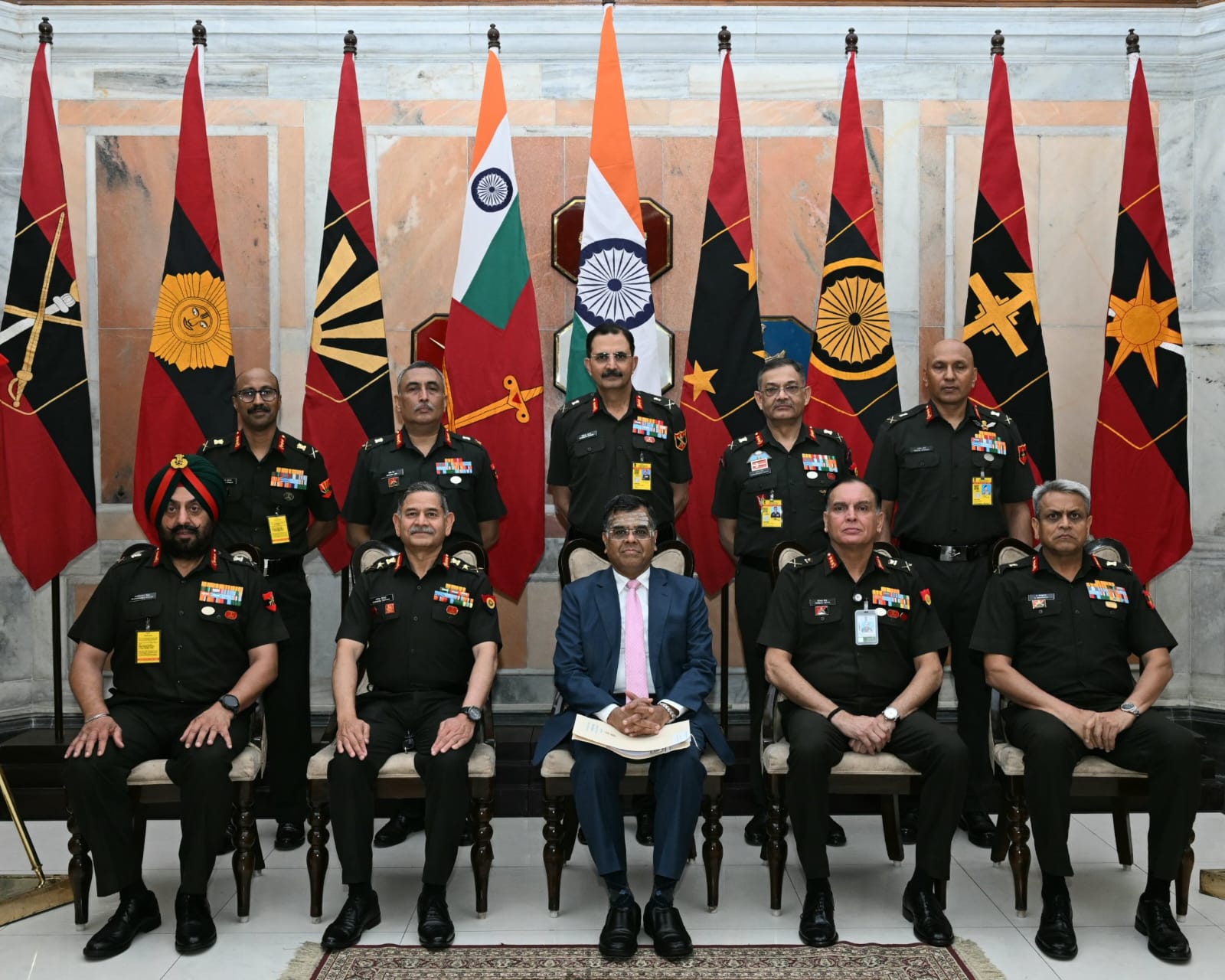
-This was the second edition of the Indian Army’s flagship international seminar, the Chanakya Defence Dialogue, which culminated on 25th October at the Manekshaw Centre in Delhi. This two-day event brought together policymakers, strategic thinkers, academia, defence personnel, veterans, scientists, and subject matter experts from India and abroad to examine India’s strategic directions and developmental priorities.
-The Chanakya Defence Dialogue 2024, themed “Drivers in Nation Building: Fueling Growth Through Comprehensive Security,” sparked essential discussions on the integration of security dynamics within the broader context of national and international policymaking. Prominent speakers from India, the United States, Russia, Israel, and Sri Lanka, offered a global perspective on how security influences our nation’s developmental trajectory toward Viksit Bharat @2047. The dialogue aimed not only to analyse the current landscape but also to formulate visionary strategies for sustainable and inclusive growth’.
Geo political pillar” The following points need to be looked into: But first what is land warfare:
Land warfare or ground warfare is the process of military operations eventuating in combat that takes place predominantly on the battlespace land surface of the planet. Land warfare is categorized by the use of large numbers of combat personnel employing a diverse set of combat skills, methods and a wide variety of weapon systems and equipment, conducted in diverse terrains and weather environments. Land warfare, by virtue of being conducted in defence of urban and rural population areas, dominates the study of war, and is a focus for most national defence policy planning and financial considerations.
Land warfare in history has undergone several distinct transitions in conduct from a large concentration of largely untrained and irregularly armed populace used in frontal assaults to current employment of combined arms concepts with highly trained regular troops using a wide variety of organisational, weapon and information systems, and employing a variety of strategic, operational and tactical doctrines.
Although land combat in the past was conducted by the combat arms of the armed forces, since World War II it has largely involved three distinct types of combat units: infantry, armour, and artillery. These arms, since the Age of Sail, have used amphibious warfare concepts and methods to project power from the seas and oceans, and since the wide introduction of military transport aircraft and helicopters have used airborne forces and vertical envelopment to the variety of doctrines used to prosecute warfare on land.
What happened in the Conference:
On the second day, the dialogue featured two special addresses. Dr S Somanath, Chairman of ISRO, emphasised on the pivotal role India’s space sector plays in strengthening national security. The ISRO Chief discussed the significance of space in modern times, especially given the growing congestion and competition within the realm of satellite communication, navigation, space science, and earth observation. He noted that space has become a crowded and contested field, with natural, accidental, and intentional hazards like jamming, anti-satellite (ASAT) threats, maneuvering vehicles, and directed energy weapons creating complex operational risks. Addressing these issues, ISRO is focusing on Space Situational Awareness (SSA), a comprehensive approach involving observation, analysis, and mitigation, to ensure the safety of its assets and national interests in space. He highlighted advancements in satellite technology, space-based surveillance, and communication systems critical for enhancing the country’s defence capabilities and growth in the sector. Furthermore, the ISRO Chief discussed the importance of enhancing observation capabilities, underscoring the need for satellites with low revisit times and high refresh rates for military use. Privatisation and the launch of additional satellites were also identified as crucial to strengthening India’s strategic posture in space. He also emphasised the growing use of indigenous components in India’s space sector, with rockets now comprising 95% and satellites 60% domestically sourced materials. This shift is supported by stringent mechanisms for thoroughly inspecting any foreign-imported components, ensuring quality and security in all equipment. These advancements mark a substantial step toward achieving ‘Atmanirbharta’ (self-reliance) in the space domain. As ISRO advances its SSA initiatives and satellite deployment, it is committed to bolstering both national and global space security through innovation and collaboration, ensuring preparedness against emerging space challenges.
-The second special address by Ms Ruchira Kamboj, Former Permanent Representative of India to the UN, was on India’s evolving and influential role in shaping today’s multilateral world. The lecture covered six important themes: India’s historical role as a UN founding member; its tenure on the UN Security Council under the 5S framework articulated by the Hon’ble Prime Minister Narendra Modi; a strong anti-terrorism stance; significant contributions to UN peacekeeping; the call for essential reforms in the UNSC; and India’s soft power stance , which supports the Global South through initiatives like yoga, climate-resilient crops, and a commitment to peace and multilateralism. She highlighted the nation’s consistent advocacy for reforming global governance structures to make them more representative and equitable. She also underlined India’s leadership in addressing pressing global challenges such as climate change, sustainable development, and global health crises, while also championing the rights of developing nations. She stressed upon the importance of safeguarding India’s strategic interests by leveraging its diplomatic clout, actively participating in peacekeeping operations, and fostering global partnerships. Additionally, she pointed to India’s push for a permanent seat in the UN Security Council, showcasing its growing stature as a responsible and constructive global actor, committed to promoting a rules-based international order and ensuring the voices of the Global South are heard in shaping future multilateral frameworks.
The second day of Chanakya Defence Dialogue 2024 was structured into three sessions, covering key aspects of comprehensive security, with prominent speakers sharing their insights: –
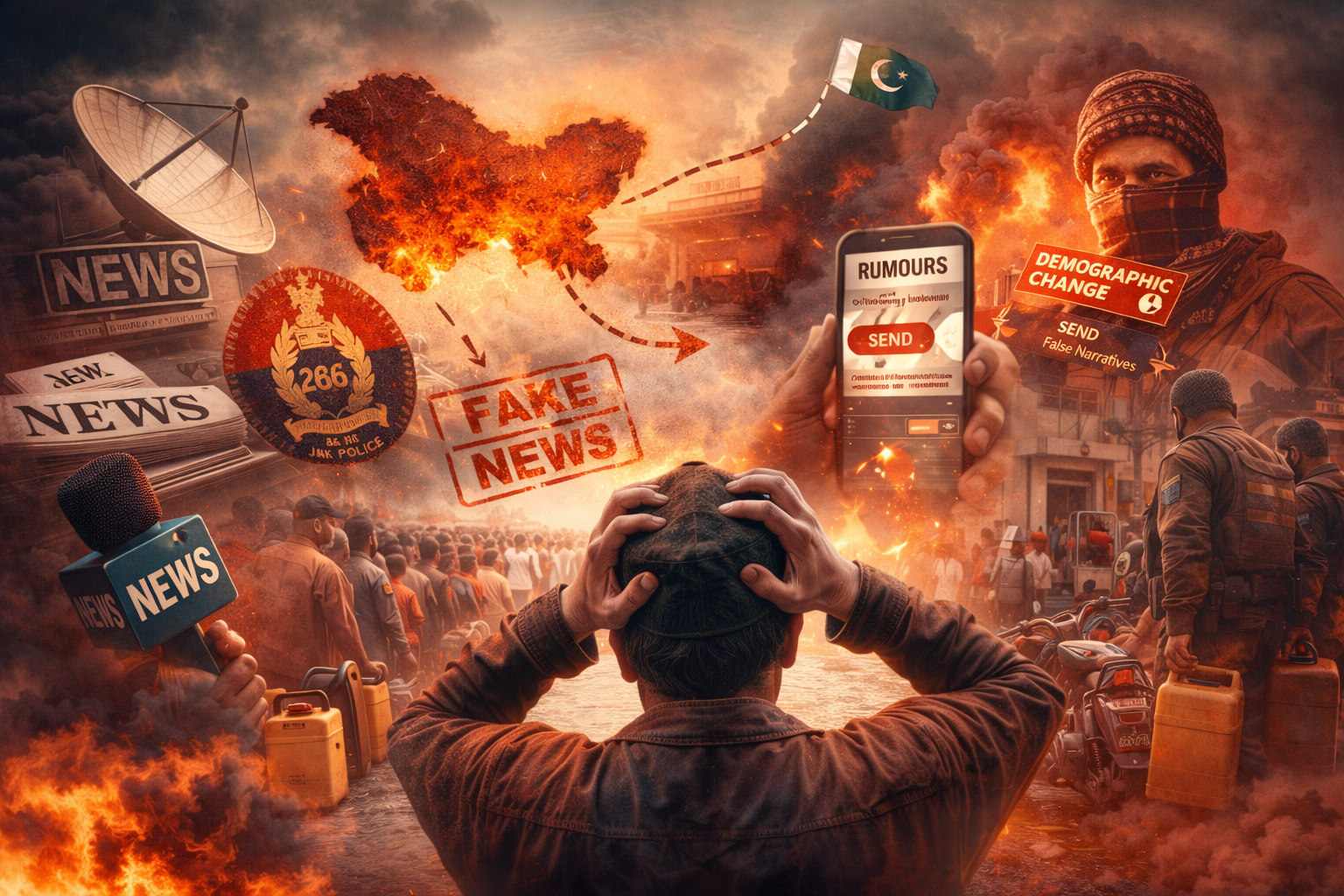
Session 1: Social Cohesion and Inclusive Growth: Pillars of a Secure Nation. The session was chaired by Shri RR Swain (IPS), DGP, Jammu & Kashmir Police, in his Address, he emphasised the vital link between a secure environment and economic growth, investment and social progress. He shed light on separatist politics, noting that false narratives spread by terrorist factions are part of a “well-oiled machine” aimed at destabilising India through a “battle of narratives.” Swain highlighted the significant improvements in governance over the past decade, emphasising efforts toward equality and fairness across communities without discrimination. Yet, he acknowledged ongoing challenges, particularly in promoting social growth, countering substance abuse, and dispelling terrorist propaganda that suggests nothing positive can come from the region. These remain critical areas of focus to ensure sustained peace and progress in Jammu and Kashmir.
This session delved into internal security, legal frameworks, and the importance of societal unity. Panelists Dr. Sudhanshu Trivedi (MP), Ms. Meenakshi Lekhi (Former MP and lawyer), and Gen. V K Singh (Retd) discussed how India can strengthen its security structures through enhanced social unity, equitable economic development, and fostering institutional trust. Dr. Trivedi highlighted the role of a cohesive society, emphasising that India’s nationalistic spirit bolsters resilience in its armed forces and strengthens individual resolve. He cited the Kargil War as an example of India’s unified approach, in contrast to other nations, and underscored the Agnipath scheme’s role in fostering cohesion. Ms. Lekhi spoke to the role of law enforcement and justice as pillars of stability, noting challenges like political interference, resource limitations, and the need for technology enhancements. Advocating for accountability, equality, and community engagement, she reinforced India’s zero-tolerance approach to terrorism, describing state-sponsored activities like the Khalistan movement as serious threats. Gen. V K Singh emphasised the need for synergy across security agencies to prevent fragmented efforts, proposing a framework for convergence that includes timely intelligence integration, resource coordination, and capability building. He highlighted the need for control over false narratives on social media and deliberated upon the internal security as every citizen’s responsibility.
The panel collectively underscored that India’s security requires a robust integration across social, legal, and defense domains, each reinforcing the other to strengthen India against internal and external threats. The panel also proposed evidence-based policies for equitable resource distribution and inclusive economic growth, addressing disparities and reinforcing national unity. Best practices for reforming law enforcement and judicial systems were discussed, including community-engaged policing, judicial impartiality, and anti-corruption measures to boost public trust. Strategies for cultivating a shared national identity, enhancing social cohesion through inclusive education, and balancing security with social development were also explored. Finally, the session addressed ways to tackle insurgency and terrorism through socio-economic and political reforms, improve intelligence sharing, and enhance coordination between security agencies.
Session 2: Blurring Frontiers: The Convergence of Technology & Security.
Chaired by Lt Gen Raj Shukla (Retd), this session explored the intersection of technology and security. Panelists Dr. Chintan Vaishnav (NITI Aayog), Brig Gen Eran Ortal (SIGNAL Group, Israel), and Mr. Dmitry Stefanovich (IMEMO, Russia) discussed emerging technologies—such as artificial intelligence, quantum computing, IoT, and blockchain—and their role in enhancing security through better threat detection, operational efficiency, and data integrity, while also addressing the new vulnerabilities and ethical challenges they bring. The panel provided evidence-based policy recommendations to strengthen cyber resilience, protect critical infrastructure, and tackle emerging technological threats. They also examined how to balance technological innovation with strong security measures, and proposed ethical guidelines for AI in security applications, ensuring alignment with societal values and privacy concerns.
Session 3: Groundbreakers: Shaping Land Warfare, Reflections for the Indian Army.
The final session, Chaired by Vice Admiral A B Singh (Retd), examined the Indian Army’s integration of advanced technologies to enhance battlefield readiness. Panelists Dr. Konstantin Bogdanov (IMEMO, Russia), Prof. Amit Gupta (University of Illinois, US), and Dr. Patrick Bratton (US Army War College) discussed how emerging technologies – such as artificial intelligence, unmanned systems, cyber warfare tools, and autonomous weapons – can strengthen the Indian Army’s capabilities by improving surveillance, precision strikes, and multi-domain operations, while also addressing new vulnerabilities and ethical concerns. The discussion highlighted the dual challenges of rapid technological advancements and evolving security threats, emphasizing the need to balance innovation with strong defense strategies. The panel explored ways to integrate these technologies into the Army’s infrastructure, enhance the resilience of critical military assets, and ensure protection against sophisticated threats. The session also stressed the importance of fostering indigenous defense technologies in line with the Atmanirbhar Bharat initiative, reducing reliance on foreign technologies, and encouraging strategic partnerships between the military, technology experts, and industry leaders to drive innovation and develop responsible solutions for current and future challenges.
In his closing address, Lt Gen N S Raja Subramani, Vice Chief of the Army Staff (VCOAS), highlighted the Indian Army’s dedication to a secure and prosperous Bharat, emphasising on critical themes spanning geopolitics, economics, environmental concerns, space, multilateral issues, technology and the shifting dynamics of land warfare. He emphasised the intrinsic link between economic growth and national security, underscoring the military’s central role in a “Whole of Nation” approach to defence. Strategic partnerships with other nations were noted as essential for deterring larger adversaries, with a balanced blend of hard and soft power deemed crucial – acknowledging that soft power alone cannot secure victory in conflicts. He highlighted India’s leadership as a voice for the Global South, calling for reliable and resilient supply chains as vital for stability. He also stressed the importance of including local communities in border area development, which not only benefits the armed forces but also promotes regional economic and community growth. With the nature of warfare evolving, he concluded by underscoring the importance of training and technological proficiency as essential tools for addressing modern security challenges.
The CDD 2024 served as a landmark platform for strategic thinkers, policymakers, and security specialists to forge resilient frameworks for India’s future. Through its diverse discussions, the dialogue fostered collaborative problem-solving and explored solutions that can influence India’s strategic direction on National Security and endeavours towards Viksit Bharat @2047.
Author


 Sheikh Sameer