Sheikh Sameer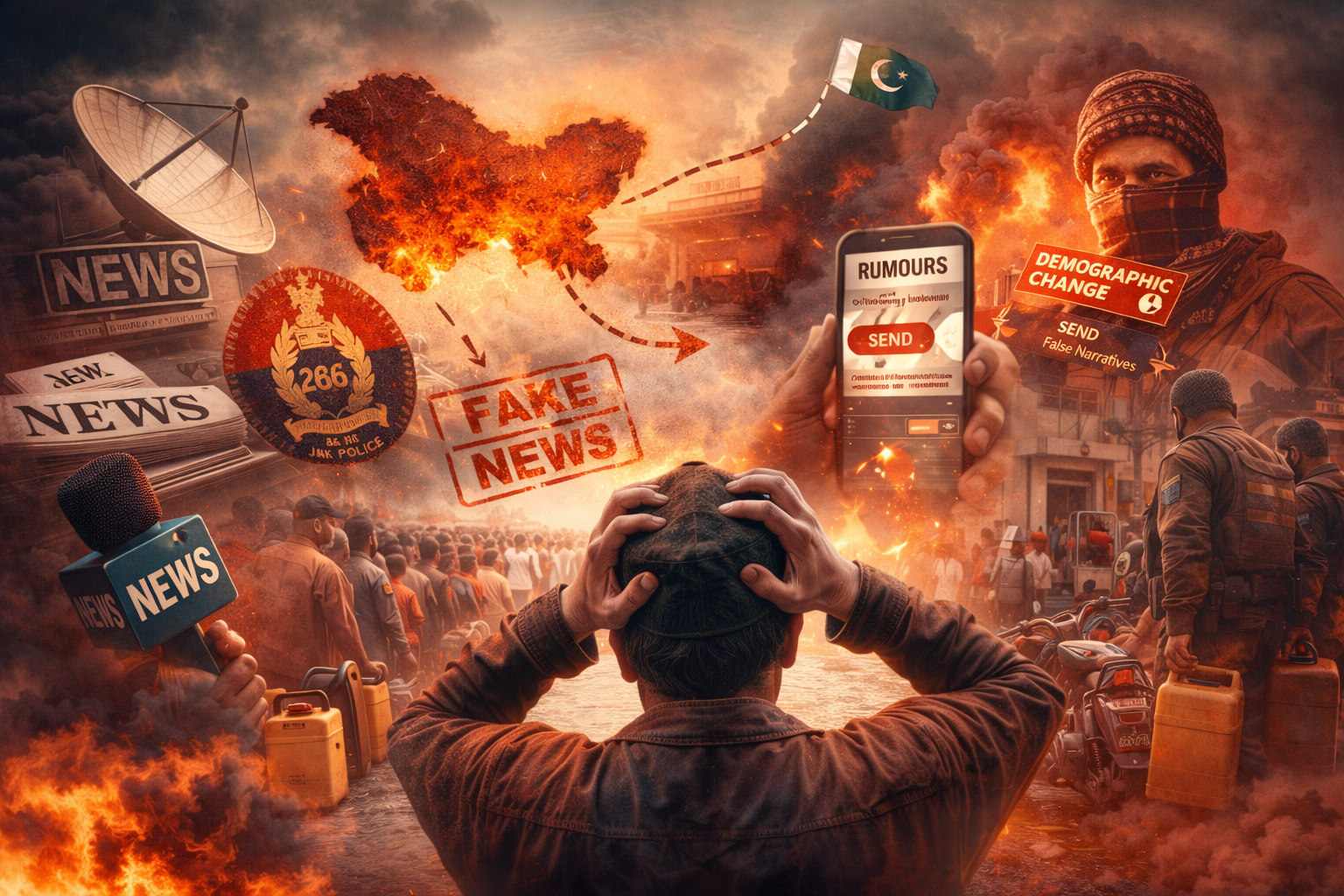
In conflict zones, truth is rarely the first casualty—it is often the first battleground. Nowhere is this more evident than in Kashmir, where competing narratives have long shaped perceptions, influenced behavior, and, at times, dictated reality itself. In an age dominated by instant communication and digital amplification, the boundary between fact and fiction is increasingly blurred. The pressing question, therefore, is: Who truly shapes Kashmir’s story—those who live it, those who report it, or those who manipulate it from afar?
The Power of Narrative in Conflict Zones
Narratives are not just stories; they are powerful tools of influence. In politically sensitive regions like Kashmir, narratives can mobilize crowds, create panic, distort ground realities, and even alter the course of events.
Unlike facts, which are rooted in verifiable evidence, narratives are often selective interpretations shaped by interests, ideologies, and strategic objectives. In Kashmir, these narratives emerge from multiple sources—local communities, political actors, media outlets, and increasingly, external forces seeking to influence perceptions.
A Recent Example: Panic Over an “Implied Lockdown”
A recent incident illustrates how quickly narratives can override reality.
Amid rising tensions in the Middle East due to the ongoing Iran–US–Israel conflict, concerns about a potential global energy crisis were widely discussed. In this context, India’s Prime Minister reassured the nation that the country was prepared to face any such challenge, much like it had successfully navigated the COVID-19 lockdown.
However, in Kashmir, this message took on a different meaning.
Through informal conversations, social media interpretations, and word-of-mouth communication, the statement was decoded by some as an indication that another lockdown might be imminent. Within hours, this interpretation evolved into a widely accepted narrative.
The following day, long queues were witnessed outside petrol pumps and gas agencies. People rushed to stockpile fuel and LPG cylinders, fearing shortages. This happened despite repeated assurances from authorities that there was no shortage and that supply chains were intact.
This incident was not driven by policy—it was driven by perception. It was a clear example of how narratives, once formed, can trigger real-world consequences.
How Narratives Take Shape
The lifecycle of such narratives often follows a predictable pattern:
Trigger: A statement or event with room for interpretation
Distortion: Selective or exaggerated interpretation
Amplification: Rapid spread through social media and informal networks
Action: Public response based on perceived reality
By the time official clarifications emerge, the narrative has already embedded itself in public consciousness.
Historical Context: Narratives During Militancy
Kashmir has witnessed similar patterns in the past, particularly during the peak years of militancy.
1. “India Will Bomb Kashmir”
Rumours frequently circulated that large-scale military strikes were imminent. These claims had no factual basis but created widespread fear and uncertainty.
2. Demographic Change Narrative
Another recurring narrative suggested forced demographic changes in the region. While policy discussions existed, exaggerated and misleading versions were propagated to fuel anxiety and resistance.
3. Crackdown Rumours
Speculation about mass arrests or sweeping crackdowns often led to panic, shutdowns, and disruption of normal life—even in the absence of any such plans.
These narratives were not merely spontaneous—they were often strategically timed and targeted.
External Influence: Information as a Weapon
A critical aspect of Kashmir’s narrative ecosystem is the role of external actors. Over the years, it has been observed that many misleading narratives were deliberately pushed from across the border, particularly from Pakistan.
The objective of such efforts has been consistent:
To create chaos and unrest
To erode public trust in institutions
To maintain a constant state of psychological tension
This form of engagement is widely understood as information warfare—a strategy that relies on misinformation and propaganda rather than direct confrontation.
With the advent of digital platforms, this strategy has become even more effective. False narratives can now be disseminated widely within minutes, often disguised as credible information.
Media and Social Media: Amplifiers of Narratives
The media plays a crucial role in shaping public discourse. Responsible journalism can bring clarity and truth, but irresponsible reporting can amplify confusion.
Social media, however, has transformed the landscape entirely. Platforms like WhatsApp and Facebook have become primary sources of information for many, especially in regions with existing trust deficits.
The challenges are significant:
Information spreads faster than verification
Emotional content travels more widely than factual reporting
Echo chambers reinforce existing beliefs
The recent fuel panic incident clearly demonstrated how quickly misinformation can translate into mass behavior.
Government Response: Countering the Narrative War
Recognizing the growing threat of misinformation, the government has taken several proactive steps to counter fake narratives.
The Information Department of Jammu & Kashmir has initiated multiple measures to verify and counter fake news. Regular advisories and circulars are issued to clarify misinformation and provide accurate updates to the public. These efforts aim to ensure that authentic information reaches people before rumours can take hold.
At the same time, the Jammu & Kashmir Police has played a crucial role on the front foot in tackling rumour-mongering. Through active monitoring of social media platforms, timely advisories, and legal action against those spreading false information, the police have worked to contain the spread of fake and misleading narratives.
Their approach includes:
Real-time fact-checking and clarification
Public awareness campaigns
Identification and action against misinformation networks
These efforts have become an essential part of maintaining public order and preventing panic-driven situations.
Psychology of Fear: Why People Believe Narratives
To understand the power of narratives, one must also understand the psychology behind them.
Kashmir’s history of conflict has created an environment where uncertainty is a constant. In such conditions:
People are more likely to believe alarming information
Past experiences shape present reactions
Trust gaps can amplify rumours
This makes society more vulnerable to misinformation, especially when it aligns with existing fears.
Reality vs Perception
The biggest challenge lies in the gap between reality and perception.
Reality: Adequate supplies, no lockdown, stable situation
Perception: Crisis imminent, need to prepare
When perception overrides reality, it leads to:
Panic buying
Social anxiety
Economic disruption
Bridging this gap requires not just information, but trust and credibility.
Who Shapes Kashmir’s Narrative?
The shaping of Kashmir’s narrative is a collective process involving multiple actors:
People: Their experiences and responses
Government: Policies and communication
Media: Framing and reporting
External Forces: Strategic misinformation
Social Media: Amplification and distortion
The interplay of these forces determines whether narratives align with reality or diverge from it.
The Cost of Misinformation
The consequences of false narratives are tangible:
Economic losses due to panic behavior
Increased stress and anxiety among people
Administrative challenges in maintaining order
Long-term erosion of trust
In extreme cases, misinformation can escalate tensions and create instability.
The Way Forward
To ensure that narratives reflect reality rather than distort it, a comprehensive approach is needed:
1. Transparent Communication
Authorities must provide timely and clear information.
2. Responsible Media
Journalism must prioritize accuracy over sensationalism.
3. Public Awareness
Citizens must develop the ability to critically evaluate information.
4. Strong Institutional Response
Efforts by the Information Department and J&K Police must continue and expand.
5. Countering External Propaganda
Strategic measures are needed to neutralize misinformation originating from outside.
Kashmir’s story is too complex and too important to be shaped by distorted narratives. While challenges remain, so do efforts to ensure that truth prevails over misinformation.
The recent fuel panic incident serves as a reminder that in today’s interconnected world, perception can quickly become reality. Narratives—whether organic or engineered—have the power to influence behavior, shape opinions, and alter outcomes.
The responsibility, therefore, lies with all stakeholders to ensure that Kashmir’s narrative is grounded in truth, not speculation.
Because ultimately, the question is not just who shapes Kashmir’s story—but whether that story reflects reality or is driven by forces that seek to distort it.