M S Nazki
By M S Nazki
What is a medal? But it worths a lot! Those who achieve it know much more about it!
-A medal on the chest does matter because it serves as a profound symbol of dedication, sacrifice, and courage, representing far more than just metal and ribbon. These awards act as milestones of a journey, highlighting years of resilience, discipline, and, in military contexts, the immense sacrifices made in service to a nation.
-Key aspects of why medals matter include:
-Storytelling & Legacy: Each medal tells a story, acting as a testament to moments of courage, camaraderie, and duty. They are a legacy, carrying the memory of battles fought and sacrifices made, ensuring the history behind them is not forgotten.
-Symbol of Sacrifice: Medals represent not only the pride of achievement but also the pain and risks associated with service. They are often described as being earned, not just given, signifying a “chest full of honour” and a “title that no rank can surpass”.
-Recognition of Achievement: Whether in sports or service, a medal represents overcoming personal, physical, or operational challenges.
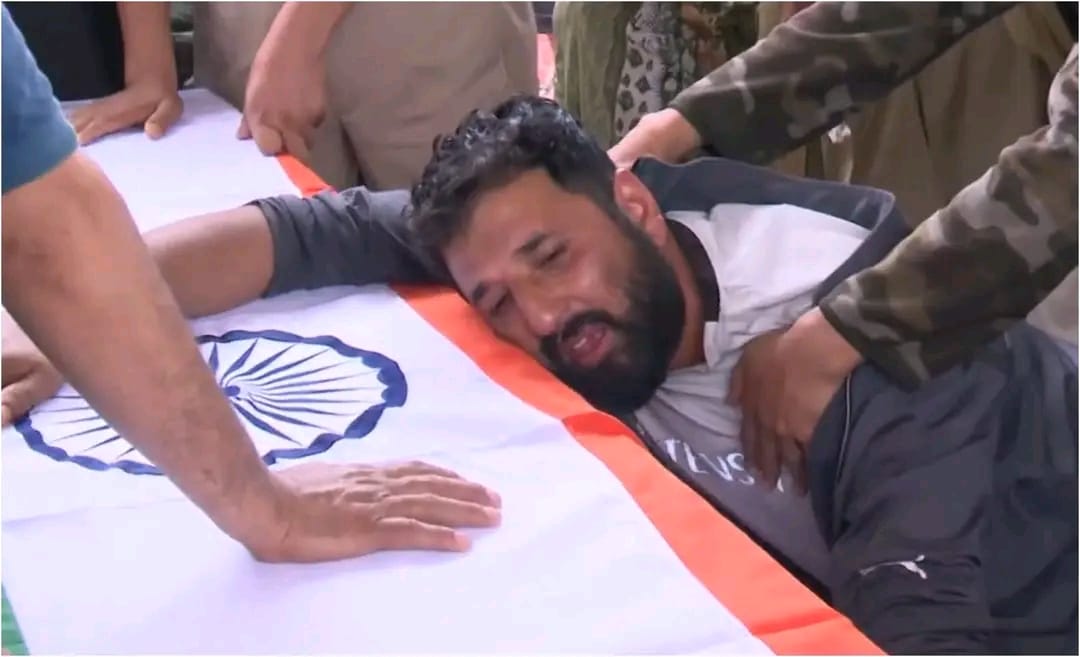
-Honoring the Fallen: Allowing next of kin to wear the medals of deceased service personnel ensures the legacy of their service lives on, providing comfort and pride to families.
-Stories are many and we will shortlist them for you:
-Sheetal Devi, a 19-year-old from Jammu & Kashmir born without arms, has redefined sporting history by becoming the World Archery Para Archer of the Year 2025. Using her feet and legs to shoot, the Arjuna Awardee won gold at the World Para Archery Championships and a Paralympic bronze in 2024, turning immense physical challenges into unparalleled global success.
-Tajamul Islam (Kickboxing Champion): At just 13, she won her second gold medal at the World Kickboxing Championship in Egypt, rising from humble beginnings to become a global champion.
-Rutba Showkat (Martial Arts & Guinness Record): A Srinagar girl who has won 60 medals in martial arts and achieved a Guinness World Record for paper boat folding.
-Historic Royal Medals (1890s): Maharaja Ranbir Singh and Pratap Singh instituted medals like the Hunza Nagar Badge (1891) and the Jammu and Kashmir Medal (1895) to honor soldiers for bravery, such as those in the “1st Mountain Battery”.
-Post-2019 Police Medals: Following the abrogation of Article 370, the “Sher-i-Kashmir” police medal was renamed the “J&K Police Medal” in 2020, with the national emblem of India replacing the former image in 2022.
-These stories highlight resilience, breaking barriers, and the deep-rooted military and sporting history of the region……………!
-Every Medal has a Story!
Listen to the firsthand accounts from those who lived it – as they recount the split-second decisions and selfless acts of courage that earned them their #Gallantry awards and the power of collective efforts towards achieving Excellence. Salute to the indomitable spirit of the Indian Soldier.
-The indomitable spirit of the Indian soldier is a tale of unparalleled courage, often showcased through supreme sacrifice, such as Rifleman Jaswant Singh Rawat’s lone stand against overwhelming odds, holding a post for 72 hours. From icy heights to searing deserts, they uphold the “nation first” philosophy, often anonymity-preferring guardians serving at 17,000 feet.
-The Lone Sentinel of Nuranang
The wind at 14,000 feet in Arunachal Pradesh didn’t howl; it screamed, cutting through the thin olive-green uniform of the soldiers stationed at Nuranang during the 1962 conflict. Among them was Rifleman Jaswant Singh Rawat.
As the enemy advanced, heavy machine gun (MMG) fire pinned down the platoon. The order was to retreat. But Jaswant refused. He knew that if the post fell, the road to the plains would be exposed.
-With two comrades, Lance Naik Trilok Singh Negi and Rifleman Gopal Singh Gusain, Jaswant acted. Under the cover of darkness, they crawled across the treacherous, rocky terrain, reaching the enemy bunker. Amidst a shower of grenades, Jaswant and his brothers-in-arms snatched the enemy’s MMG.
-Trilok and Gopal were mortally wounded, but Jaswant, despite being hit, refused to stop. He used the captured weapon to turn the tide, holding the post alone for 72 hours. He positioned uniforms in various trenches to simulate a large force, feeding the machine gun with relentless precision.
-When reinforcements finally arrived, they found that this one soldier had stalled a company-sized advance. Jaswant Singh Rawat had made the supreme sacrifice, dying on the spot. His spirit, however, did not die. Today, the Indian Army treats him as a living, serving officer—polishing his shoes, ironing his uniform, and elevating him through the ranks, proving that the indomitable spirit of the Indian soldier is eternal.
-Behind every medal lies a story rarely seen by the public—a narrative of immense sacrifice, discipline, silence, and unyielding belief. These honors are not just physical rewards, but embodiments of struggle and perseverance.
-Stories of Sacrifice and Support
Family Sacrifices: Athlete Saina Nehwal’s family, for instance, supported her career by dedicating their time and savings, with her father investing his provident fund into her training.
-Quiet Heroes: Many medals are made possible by unrecognized support, such as mentors and mentors providing resources when athletes had none.
-Dedication and Pain: Behind each medal is a tale of resilience, overcoming physical pain and emotional exhaustion.
-Stories of Resilience and Comebacks
-Overcoming Setbacks: Medals represent a refusal to quit, involving,, and coming back from failures, injuries, and personal hurdles.
-The “Hard Work” Truth: Olympic medalist Manu Bhaker noted that these achievements are the result of rigorous hard work and a firm belief that effort leads to results.
Struggle is Key: Boxer Mary Kom emphasized that every one of her medals has a story of struggle behind it, particularly while balancing roles outside the ring.
-Stories of Giving Back
-Inspiration Medals: In some events, like the Tata Mumbai Marathon, participants earn a medal to give to someone who inspired them, acknowledging that the achievement is shared.
-Shared Victories: Athletes often feel that medals belong as much to the family and mentors who supported them as they do to themselves.
Ultimately, a medal is a testament to the belief that with endurance and determination, “the person in the mirror is capable of anything”………
The history of Indian Army medals reflects a transition from British Imperial awards to indigenous honors, beginning with East India Company decorations in 1757. Post-independence, the first Indian gallantry awards—Param Vir Chakra, Maha Vir Chakra, and Vir Chakra—were instituted on 26 January 1950 (retroactive to 15 August 1947), replacing British honors………….
Key Historical Developments:
-Colonial Era (1757-1947): The East India Company awarded medals like the Indian Order of Merit (1834). The British Indian Army later awarded medals such as the Victoria Cross, Military Cross, and various campaign stars (e.g., 1914-15 Star, WW2 medals).
-Post-Independence (1947–Present):
-January 26, 1950: The three highest wartime gallantry awards were established: Param Vir Chakra (highest), Maha Vir Chakra, and Vir Chakra.
-January 4, 1952: Three peacetime gallantry awards—Ashoka Chakra Class I, II, and III—were created, later renamed Ashoka Chakra, Kirti Chakra, and Shaurya Chakra in 1967.
-January 26, 1960: Specialized service medals were instituted, including the Sainya Seva Medal (for service under special conditions), Videsh Seva Medal, Sena Medal (for devotion to duty), and the Vishisht Seva Medal series for distinguished service.
-Design Evolution: The Param Vir Chakra was designed by Savitri Khanolkar, featuring a replica of Indra’s Vajra. The Ashoka Chakra features the Ashoka Chakra surrounded by a lotus wreath.
Medals in the Indian Army are achieved through extraordinary bravery, distinguished service, or long-term dedication, classified into wartime gallantry, peacetime gallantry, and distinguished service awards. They are approved by the President and announced on Republic Day or Independence Day, aiming to honor valour in combat (e.g., Param Vir Chakra) or exceptional service (e.g., Sena Medal).
-Key Categories and How They Are Achieved:
-Wartime Gallantry Awards (Highest Valor): These are awarded for bravery in the face of the enemy.
-Param Vir Chakra (PVC): Highest award, for extreme, daring bravery in wartime.
-Maha Vir Chakra (MVC): Second highest, for acts of gallantry in wartime.
-Vir Chakra: Third highest, for bravery during combat.
-Peacetime Gallantry Awards: Awarded for courage away from the battlefield or in non-operational areas.
-Ashoka Chakra: Highest peacetime award, for bravery in non-combat situations.
-Kirti Chakra: Second highest peacetime gallantry award.
-Shaurya Chakra: Third highest peacetime gallantry award.
-Distinguished Service Medals: Awarded for exceptional service to the Army, such as the Sena Medal (devotion to duty), Vishisht Seva Medal (exceptional service), and Yudh Seva Medal (service during war).
-Commendation Cards: Issued by top officials (Chief of Army Staff) for specific acts of bravery or distinguished service, often awarded to non-combatants and serving personnel alike.
-Process of Recognition:
-Recommendation: Acts of bravery are documented and forwarded through the chain of command.
-Verification: The Ministry of Defence reviews citations to verify the action.
-Approval & Announcement: The President of India approves, with awards announced on 26th January (Republic Day) or 15th August (Independence Day).
Civilians often demonstrate extraordinary courage, performing acts of bravery that directly serve the nation, sometimes at the cost of their lives. Many are recognized with national bravery awards, such as the National Bravery Award (India), Jeevan Raksha Padak, or the Kirti Chakra.
- to end here are short stories of civilians who received medals for serving the nation:
-Shravan Singh: The 10-Year-Old “Youngest Warrior”
Amidst a war-like situation with drones spotted near Ferozepur, Punjab, 10-year-old Shravan Singh did not hide. Instead, the son of a local farmer helped soldiers during “Operation Sindoor.” He brought water, milk, lassi, and ice daily to the jawans in the scorching heat.
-Award: The Indian Army titled him the “youngest civil warrior,” and he was honored with the Pradhan Mantri Bal Puraskar for extraordinary patriotism.
-Dishant Mehndiratta: The Fearless Young Mind:
On April 4, 2015, in Panchkula, Haryana, a man held a knife to Dishant’s mother’s neck and threatened his family. Despite the danger, 15-year-old Dishant quickly came up with a plan. He fell on the stranger’s feet, pretending to plead, before suddenly grabbing the knife and throwing it away, leading to the attacker’s arrest.
-Award: General National Bravery Award.
-Shivampet Ruchitha: The Youngest Recipient
On July 24, 2014, 8-year-old Ruchitha was on her school bus when it stopped on a railway track. She saw a train approaching. Displaying an incredible presence of mind, she pushed two fellow students out of the window to safety before jumping off herself. Though she could not save her younger sister, she managed to save the others.
-Award: Geeta Chopra Award (She was the youngest person to receive it that year).
-. Late Gaurav Kawduji Sahastrabuddhe: A Sacrifice for Others
-15-year-old Gaurav was a strong swimmer who saved four of his friends from drowning in Ambazari Lake in June 2014. While attempting to pull out the last boy, he hit his head on a submerged stone and drowned while his friend was saved.
-Award: Bharat Award (Posthumously).
-Mamta Dalai: Fighting the Beast
-Six-year-old Mamta and her sister Asanti were bathing in a pond in Odisha when a five-foot-long crocodile attacked Asanti. Instead of running, Mamta grabbed her sister’s hand and fought the crocodile while screaming for help, pulling her sister out of the grip.
-Award: National Bravery Award.
- Ramdinthara: Facing the Fear
Son of a tea-seller, 15-year-old Ramdinthara was walking in Mizoram when he saw two boys stuck on a live transformer fence. Despite the mortal danger of electrocution, he grabbed the boys and pulled them up, taking them to the hospital.
-Award: Bapu Gaidhani Award.
-Harekala Hajabba: The Orange Vendor’s School
-Harekala Hajabba was a poor orange vendor in Mangalore who realized his village had no school. He spent his life savings to build a school for the poor children in his community.
Award: Padma Shri (2020).
-Late Netravati M. Chavan: Supreme Sacrifice
-14-year-old Netravati heard two boys drowning in a 30-feet-deep stone quarry pond. She dove in and saved 16-year-old Muthu. When she went back to save 10-year-old Ganesh, the boy clutched her in fear, causing both to drown.
Award: National Bravery Award (Posthumously).
-Arjun Singh: The Tiger Fighter
-16-year-old Arjun Singh from Uttarakhand fought a tiger with a sickle and a stick when the animal entered his home and fainted his mother. He fought the beast until villagers arrived and the animal fled.
Award: Sanjay Chopra Award.
-Late Shivansh Singh: A Friend in Need
-14-year-old swimmer Shivansh Singh from Faizabad died while trying to save his friend from drowning in the Saryu River.
Award: Bharat Award (Posthumously)……………..Stories are many but we will relate some other time………. !
Author


 Sheikh Sameer
 The Kashmir Dialogues