Sheikh Sameer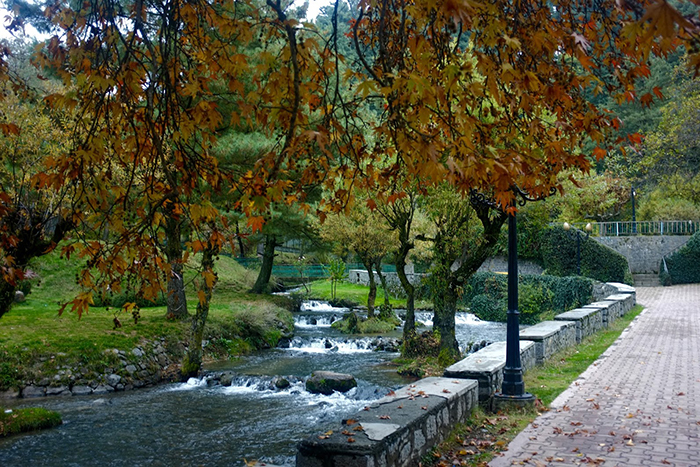
Sheikh Sameer
For decades, Kashmir’s tourism story has revolved around three iconic names—Gulmarg, Sonamarg and Pahalgam. These destinations have become synonymous with the Valley’s breathtaking beauty, attracting millions of visitors from across India and abroad. Their snow-clad mountains, lush meadows, glacial rivers and world-class landscapes have earned them international recognition. Yet, in the process, an equally enchanting Kashmir has remained hidden in plain sight.
Beyond the bustling markets of Gulmarg, the crowded roads of Pahalgam and the ever-growing tourist rush in Sonamarg lies another Kashmir—one that is quieter, slower and remarkably untouched. It is a Kashmir where rivers still flow without the echo of loudspeakers, where shepherds outnumber tourists, where forests remain undisturbed and where every village has stories that never find a place in glossy travel brochures.
As tourism in Jammu and Kashmir continues to witness record-breaking growth, perhaps the time has come to rethink what we promote and how we travel. The future of tourism may not lie in adding more hotels to already crowded destinations but in introducing travellers to places that have preserved their authenticity for generations.
The Hidden Cost of Popularity
There is no denying that Gulmarg, Sonamarg and Pahalgam have transformed the region’s economy. Thousands of families depend directly or indirectly on tourism. Hotels, restaurants, transport operators, guides, pony owners, artisans and countless small businesses have flourished because of these destinations.
However, success has also created new challenges.
During peak tourist seasons, traffic congestion stretches for kilometres. Hotel occupancy reaches saturation. Popular viewpoints become crowded with vehicles, vendors and long queues. Plastic waste, pressure on water resources and increasing commercialisation have begun affecting the fragile Himalayan ecosystem.
Ironically, many travellers who arrive in Kashmir seeking peace often find themselves navigating crowds almost comparable to metropolitan tourist hubs.
Tourism experts across the world agree that sustainable tourism requires distributing visitors across multiple destinations instead of concentrating them in only a handful of locations. Kashmir already possesses that advantage—it simply needs to showcase it more effectively.
Kashmir Beyond the Postcards
The Valley is far more diverse than the images commonly seen on social media.
There are alpine meadows where silence becomes the loudest sound. Remote villages where traditions continue untouched by rapid urbanisation. Ancient springs whose crystal-clear waters have flowed for centuries. Dense forests filled with birdsong. High-altitude valleys where the night sky remains brilliantly illuminated by stars rather than city lights.
These places are not merely alternatives to famous destinations—they represent the soul of Kashmir.
Travelling to such locations changes the experience entirely.
Instead of rushing through fixed itineraries, visitors begin walking without deadlines. Instead of waiting in queues for photographs, they spend hours beside rivers listening to flowing water. Instead of luxury resorts, they experience warm hospitality inside traditional homes where a cup of steaming kahwa often carries more warmth than five-star hospitality.
This is slow tourism in its purest form.
Yusmarg: Beauty Without the Crowds
Among Kashmir’s most underrated destinations, Yusmarg stands as a remarkable example.
Located barely a couple of hours from Srinagar, this vast meadow is surrounded by thick pine forests, rolling grasslands and pristine streams. Unlike Gulmarg, there are no bustling markets or commercial complexes dominating the landscape. Nature remains the primary attraction.
Walking through Yusmarg feels almost therapeutic.
The cool breeze carries the scent of pine trees while horses graze freely across endless meadows. The nearby Doodhganga River offers crystal-clear water rushing over smooth rocks, creating an atmosphere of complete tranquillity.
For travellers exhausted by urban chaos, Yusmarg offers something increasingly rare—silence.
Doodhpathri: The Valley That Whispers
If Yusmarg represents serenity, Doodhpathri embodies freshness.
Known as the “Valley of Milk,” this breathtaking destination transforms with every season. During summer, lush green meadows bloom with wildflowers while icy streams cut across the landscape. In winter, heavy snowfall converts the valley into a spectacular white paradise.
Unlike commercial tourist centres, Doodhpathri still retains its natural simplicity. Small tea stalls replace luxury cafés. Local vendors welcome visitors with warmth instead of aggressive marketing.
One can simply sit beside the stream, sip traditional kahwa and watch clouds drift across surrounding mountains.
Sometimes, doing nothing becomes the greatest luxury.
Gurez: Where Time Moves Differently
Among all hidden destinations in Kashmir, Gurez Valley perhaps offers the strongest reminder that tourism is about experiences rather than checklists.
Reaching Gurez requires crossing the magnificent Razdan Pass before descending into one of the most spectacular valleys in the Himalayas.
The landscape is dramatic.
Snow-covered peaks surround the valley while the emerald waters of the Kishanganga River wind gracefully through villages and farmlands. Wooden homes, traditional lifestyles and centuries-old cultural practices remain deeply rooted here.
Electricity interruptions and limited mobile connectivity, often considered inconveniences elsewhere, become blessings in Gurez.
Visitors rediscover conversations.
Children play outdoors instead of staring at screens.
Evenings are spent around traditional kitchens rather than scrolling endlessly through social media.
Perhaps digital detox does not require expensive wellness retreats—it simply requires spending a few days in places like Gurez.
Bangus: The Meadow That Refuses to Hurry
Bangus Valley is often described as one of Kashmir’s best-kept secrets.
Unlike the compact tourist spaces of popular destinations, Bangus unfolds across vast stretches of rolling meadows bordered by dense forests.
There are no crowds competing for photographs.
No constant traffic.
No overwhelming commercial activity.
Instead, visitors experience uninterrupted landscapes where wildlife, birds and shepherd communities coexist peacefully.
Bangus reminds us that not every destination needs extensive infrastructure to become memorable.
Sometimes, preserving simplicity is the greatest development strategy.
Verinag, Kokernag, Achabal and Chatpal: South Kashmir’s Hidden Treasures
Southern Kashmir presents an entirely different dimension of the Valley’s tourism landscape—one where natural springs, Mughal heritage, dense forests and secluded valleys come together to create unforgettable experiences. Yet, despite their immense beauty and historical significance, destinations like Verinag, Kokernag, Achabal and Chatpal continue to remain overshadowed by the popularity of Pahalgam.
Verinag, regarded as the source of the River Jhelum, is one of Kashmir’s most picturesque heritage sites. Enclosed within a beautifully preserved Mughal garden, its crystal-clear spring reflects centuries of history and architectural elegance. Towering chinar trees, stone pathways and tranquil surroundings make it an ideal destination for travellers seeking peace rather than crowds.
A short drive away lies Kokernag, renowned for its freshwater springs, sprawling botanical gardens and lush landscapes. The gentle sound of flowing water, colourful flower beds and cool mountain breeze create an atmosphere that encourages visitors to slow down and appreciate nature. It is also a favourite destination for birdwatchers and nature enthusiasts who prefer quiet walks over commercial attractions.
Nearby Achabal adds another remarkable chapter to South Kashmir’s tourism story. Home to the historic Achabal Mughal Garden, believed to have been developed under the patronage of Empress Nur Jahan, the destination beautifully blends history with natural beauty. The cascading spring-fed water channels, ancient chinar trees and well-maintained gardens create an ambience that transports visitors to the grandeur of the Mughal era. Achabal is more than just a garden—it is a living reminder of Kashmir’s rich cultural and architectural heritage.
Further into the forests of Shangus lies Chatpal, one of Kashmir’s most untouched and enchanting valleys. Surrounded by dense pine forests, emerald meadows and crystal-clear streams, Chatpal offers an experience that feels refreshingly authentic. Unlike commercial tourist destinations, there are no crowded markets or endless rows of hotels. Instead, visitors are greeted by absolute tranquillity, fresh mountain air and the warmth of local hospitality. The journey itself, passing through picturesque villages and winding forest roads, becomes part of the experience. Chatpal is a destination for those who wish to disconnect from the noise of modern life and reconnect with nature in its purest form.
Together, Verinag, Kokernag, Achabal and Chatpal showcase the remarkable diversity of South Kashmir. They prove that the region’s tourism potential extends far beyond famous hill stations. With thoughtful promotion, improved connectivity and sustainable development, these destinations can emerge as major attractions while preserving the very serenity that makes them extraordinary.
Charar-e-Sharief: Where Spirituality Meets Simplicity
Kashmir’s hidden treasures are not limited to natural landscapes.
Charar-e-Sharief remains one of the Valley’s most significant spiritual centres.
Surrounded by orchards and gentle hills, the historic shrine attracts devotees seeking peace rather than spectacle.
The narrow streets surrounding the shrine preserve traditional craftsmanship, local markets and everyday Kashmiri life.
Visiting such places allows travellers to understand Kashmir beyond tourism brochures.
They witness culture instead of merely consuming scenery.
The Untapped Potential of Rural Tourism
One of the greatest opportunities before Jammu and Kashmir lies in developing responsible rural tourism.
Across districts like Kupwara, Budgam, Anantnag, Bandipora, Shopian and Kulgam, countless villages possess extraordinary natural beauty but receive minimal tourist attention.
Homestays can become powerful engines of economic growth.
Instead of concentrating tourism revenue among large hotels, rural tourism distributes income directly to local families.
Women can participate through home-based hospitality.
Young people can become trekking guides, photographers or nature interpreters.
Local artisans gain new markets for traditional crafts.
Farmers find additional sources of livelihood through agri-tourism.
In many parts of the world, rural tourism has successfully reduced migration while strengthening local economies.
Kashmir possesses all the ingredients needed to replicate that success.
Tourism Must Benefit Everyone
The objective should never be replacing Gulmarg or Pahalgam.
These destinations will always remain tourism icons.
Instead, policymakers should build complementary tourism circuits connecting lesser-known locations.
A traveller visiting Pahalgam can also explore Aru, Daksum and Chatpal.
Someone heading towards Gulmarg can extend the journey to Yusmarg.
Visitors travelling south can include Verinag, Kokernag and Achabal in their itinerary.
Those seeking adventure can discover Bangus and Gurez.
This approach reduces pressure on overcrowded destinations while generating income across wider regions.
Balanced tourism is sustainable tourism.
Responsible Tourism Is the Only Way Forward
Hidden destinations are fragile.
Their greatest attraction lies precisely in what they lack—commercialisation.
Therefore, tourism development must proceed cautiously.
Large concrete structures should not replace forests.
Plastic pollution must never become acceptable.
Visitors should respect local customs, dress modestly where appropriate and avoid disturbing wildlife or communities.
Choosing local guides, purchasing locally made products and staying in family-run accommodations ensures tourism benefits residents directly.
The responsibility does not lie solely with the government.
Tourists themselves shape the future of every destination they visit.
Better Connectivity, Smarter Promotion
Infrastructure remains essential.
Road connectivity, healthcare facilities, emergency services, sanitation, internet access and tourist information centres must improve in emerging destinations.
However, development should focus on quality rather than unchecked expansion.
Digital storytelling can play an equally important role.
Social media campaigns, travel documentaries, responsible influencers and local photographers can introduce hidden destinations without encouraging irresponsible mass tourism.
Promotion should emphasise experiences rather than crowds.
Silence rather than noise.
Nature rather than luxury.
A New Vision for Kashmir Tourism
Kashmir today stands at a defining moment.
Record tourist arrivals have demonstrated the world’s enduring fascination with the Valley.
The next challenge is ensuring that this success becomes sustainable, inclusive and environmentally responsible.
The answer does not lie in building more around already saturated destinations.
It lies in discovering the Kashmir that has quietly existed beyond the spotlight.
Yusmarg’s endless meadows.
Doodhpathri’s sparkling streams.
Gurez’s timeless villages.
Bangus’ untouched grasslands.
Verinag’s historic springs.
Charar-e-Sharief’s spiritual calm.
Chatpal’s peaceful forests.
These places represent not merely tourist destinations but living landscapes where nature, culture and community continue to coexist in harmony.
Perhaps the greatest gift Kashmir can offer modern travellers is not another crowded viewpoint or another luxury resort.
It is the opportunity to slow down.
To listen to rivers instead of traffic.
To wake up to birdsong instead of alarms.
To share meals with local families instead of hotel buffets.
To experience a Kashmir that still breathes at nature’s own pace.
As tourism evolves, the Valley must ensure that its future is built not only on famous names but also on forgotten treasures waiting patiently beyond Gulmarg, Sonamarg and Pahalgam.
Because sometimes, the most unforgettable journeys begin where the guidebook ends.


 M S Nazki