Sheikh Sameer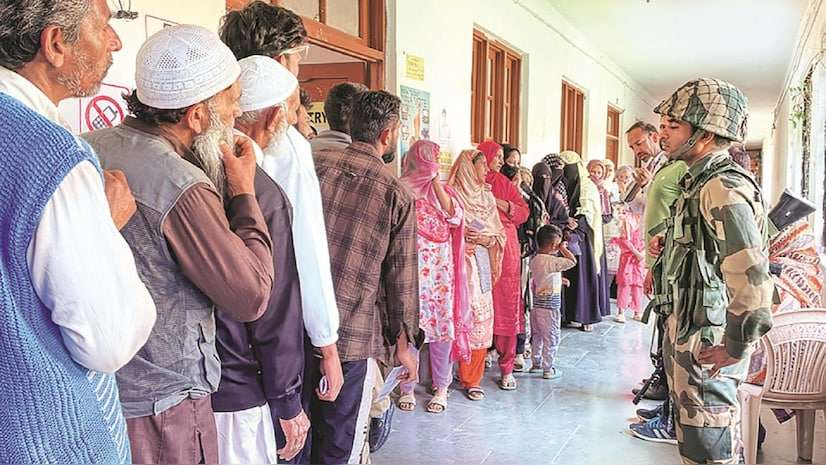
After a decade-long gap, the Jammu and Kashmir (J&K) Assembly elections are taking place at a crucial juncture in the region’s political history. This election, the first since the abrogation of Article 370 in August 2019, carries tremendous significance. Not only does it represent a democratic resurgence in the region, but it also marks a major shift in the political discourse that has dominated J&K for decades. With national and regional parties actively competing, and voter turnout higher than expected, the elections reflect both hope and uncertainty for the people of Jammu and Kashmir.
A Look Back at Previous J&K Elections
The Assembly elections in J&K have always been a contentious and narrative-driven affair, largely influenced by local issues, regional aspirations, and the broader national discourse. In the previous elections, particularly those held in 2008 and 2014, the key narratives revolved around issues of autonomy, identity, development, and the role of the Indian state in the region.
2008 Elections: Autonomy and Economic Development
In the 2008 elections, the key political slogan was “Restoring Autonomy,” a narrative pushed forward by the National Conference (NC), one of the oldest and most influential regional parties in J&K. Led by Omar Abdullah, the party campaigned on the promise of restoring the special status of J&K and ensuring that the state would have greater control over its affairs. At the same time, issues of economic development, job creation, and infrastructure were also prominent, as the region was grappling with unemployment and limited development due to years of insurgency.
2014 Elections: A New Wave of Politics
The 2014 Assembly elections were held under different circumstances, with a larger focus on development and governance. The People’s Democratic Party (PDP), led by Mehbooba Mufti, captured the public’s imagination by promising to bridge the gap between Kashmir and New Delhi. Their slogan, “Healing Touch,” aimed at addressing the grievances of the people and ensuring peace and stability. The Bharatiya Janata Party (BJP), on the other hand, entered the fray with its nationalistic agenda and “Mission 44+” in Jammu and Kashmir, focusing on integrating the region more closely with the rest of India.
The Narrative Shift: From Autonomy to National Integration
The abrogation of Article 370 in 2019 marked a significant turning point in J&K’s political landscape. Article 370 granted special status to the region, allowing it to have its constitution and autonomy over internal matters except in defense, communications, and foreign affairs. Its removal changed the status of J&K from a state to a union territory, bringing it directly under central government rule.
In the elections that followed, the narratives have shifted from autonomy to integration. Regional parties like the NC and PDP continue to advocate for the restoration of Article 370 and the return of full statehood to J&K, while national parties, particularly the BJP, emphasize development, peace, and integration with the rest of the country.
The Role of BJP: Kashmir as a National Issue
For the BJP, Kashmir has long been a focal point of its nationalistic politics. In the rest of the country, the party has consistently used the issue of Kashmir to consolidate its voter base, especially in Hindi heartland states. The abrogation of Article 370 was one of the cornerstones of the BJP’s electoral promises, and the party takes pride in presenting it as a bold step towards national unity and territorial integrity.
In the context of these elections, the BJP’s narrative is centered around development and the end of terrorism in the region. The party presents itself as the force that brought peace and normalcy to J&K by ending the era of special status, which it argues was exploited by a few elite political families for their gain. Additionally, the BJP’s stance on nationalism and security continues to be a dominant theme in its campaign, appealing to voters who want stability and development.
Regional Parties: Rallying Around Article 370
The regional parties of J&K, particularly the NC and PDP, have positioned themselves against the BJP’s stance on Article 370. Both parties argue that the abrogation has undermined the region’s identity and autonomy, leading to disillusionment among the people. Their campaigns are focused on promises of bringing back the state’s special status and fighting for the rights and aspirations of the people of J&K.
In their view, the BJP’s policies are seen as an imposition from the central government, disregarding the unique historical and political context of J&K. While these regional parties had their share of political dominance in the past, the changing political dynamics and the increased presence of national parties have put them on the defensive, especially with the emergence of new political players and voter skepticism towards traditional political elites.
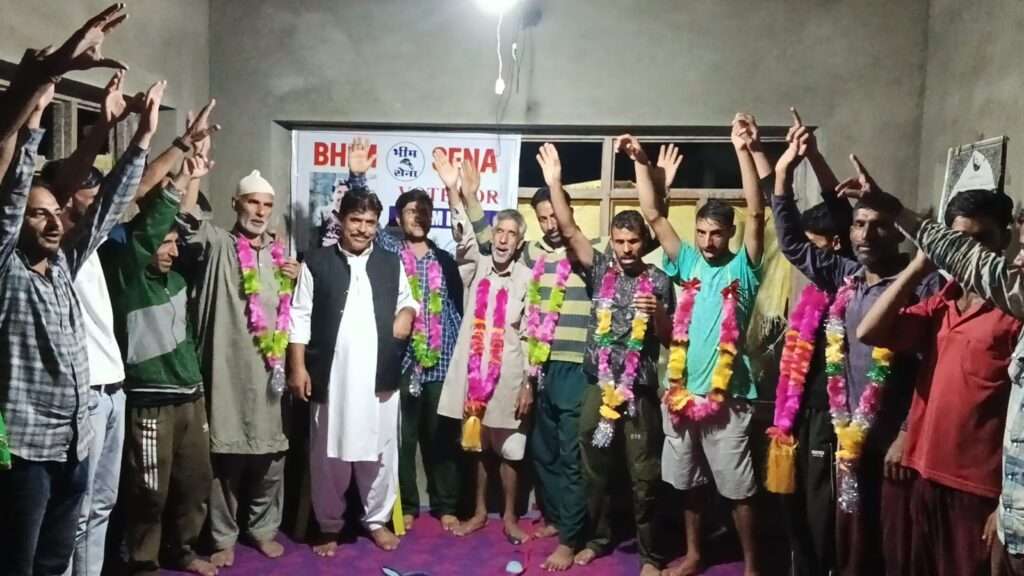
The Role of Jamaat-e-Islami: A Historical Perspective
Jamaat-e-Islami, a socio-political and religious organization, has had a complicated relationship with the political process in J&K. While Jamaat has largely been known for its religious and social work, it also had a political arm that participated in elections in the past. However, the organization has often been accused of fostering separatist sentiments, especially with its close links to the All Parties Hurriyat Conference and militant groups like Hizbul Mujahideen.
In the earlier elections, Jamaat-e-Islami contested under the banner of political parties like the Muslim United Front (MUF) in 1987. However, the infamous rigging of the 1987 elections, which many believe sowed the seeds of insurgency, led Jamaat to distance itself from the political process in later years. They often argued that elections under Indian rule would not solve the core issues of Kashmir’s autonomy and self-determination.
The question arises whether Jamaat was right in sidelining the political process at that time or if it should have actively engaged in it. In the current context, some believe that had Jamaat participated more openly in mainstream politics, it could have contributed to a political resolution rather than militancy. However, others argue that their opposition to the political process was rooted in genuine concerns about the central government’s intentions toward J&K.

Voter Sentiment and High Turnout: A New Hope?
Despite the complexities surrounding J&K’s political environment, the voter turnout in the first three phases of the elections has been remarkably high. In the first phase, turnout was 61.38%, followed by 57.31% in the second phase, and 65.65% in the third phase. This high turnout indicates a renewed faith in the democratic process, even after years of political uncertainty and the significant changes brought about by the abrogation of Article 370.
The reasons for this high turnout are multi-faceted:
Desire for Stability and Development: Many voters, particularly the youth, are looking for better economic opportunities, infrastructure development, and an end to the era of violence and instability. For these voters, the election represents a chance to elect leaders who can address their concerns and bring real change.
Rebuilding Trust in Democracy: After years of political uncertainty, the elections offer an opportunity for the people of J&K to have a say in their governance, which is particularly important for those who felt disenfranchised after the removal of Article 370.
Changing Political Dynamics: The presence of new political players and the increased participation of women and young candidates have also played a role in mobilizing voters. These new voices promise to bring fresh perspectives to J&K’s governance.
People’s Expectations and the Road Ahead
As J&K goes through these elections, the expectations from the people are clear: they want peace, development, and good governance. For many, the removal of Article 370 has been a double-edged sword. While it has brought the region closer to the national mainstream, it has also left questions about identity and autonomy unresolved.
However, there is hope that these elections could pave the way for a new political era in J&K. With the high voter turnout, it’s clear that the people are eager to engage in the democratic process, and they expect their elected representatives to deliver on promises of development and stability.
The Future: Can This Belief Last?
The key challenge for the newly elected government will be to ensure that this faith in the democratic process is not shattered. The political landscape in J&K is fraught with challenges—ranging from ongoing security concerns, economic underdevelopment, and the unresolved issue of statehood. The elected representatives will need to navigate these issues carefully while also managing the expectations of the people who have placed their faith in them through their votes.
There is cautious optimism among the masses, but there is also a palpable fear that if the new government fails to address their concerns, it could lead to further disenchantment with the political process. The people of J&K are looking for leaders who can deliver on the promises of peace, development, and good governance—and this election could be the beginning of that new chapter.
The Jammu and Kashmir Assembly elections, after a decade-long hiatus, represent a critical moment in the region’s political history. Whether they lead to a more stable and prosperous future for the people of J&K remains to be seen, but the high voter turnout and engagement in the process are promising signs that democracy, even in one of India’s most complex regions, still holds strong.