The Kashmir Dialogues
Fear of Losing POJK: Pakistan’s Desperate Gambit in Jammu and Kashmir
In recent months, the security situation in Jammu and Kashmir has seen a sharp escalation, particularly in areas that had been largely free from militant activities for over a decade. The resurgence of terror attacks, especially in the Jammu region, has raised alarm bells within India’s security establishment. These attacks, marked by their precision and the use of sophisticated weaponry, have resulted in the deaths of several Indian soldiers, leading to concerns that Pakistan, driven by fear and confusion, is attempting to destabilize the region to retain control over Pakistan-Occupied Jammu and Kashmir (POJK).
July has been particularly challenging for India’s security forces, with nine casualties reported in the first three weeks alone. This sudden spike in violence is especially troubling given that the region had been declared “militancy-free” some 15 years ago. The casualty count for 2024 is rapidly approaching the total number of deaths recorded in all of 2023, with attacks occurring not only in the traditionally volatile areas of Poonch and Rajouri but also in Kathua, Udhampur, Doda, and now even in South Kashmir.
The latest incidents, including the killing of two soldiers in the Gadole area of South Kashmir and the death of an army captain in Assar, Doda, have further underscored the seriousness of the threat. What is particularly concerning is the level of planning and execution involved in these attacks. Unlike the sporadic and poorly coordinated assaults carried out by local militants in the past, these recent attacks appear to be meticulously planned and executed with military precision, resulting in minimal casualties among the attackers themselves.
The Involvement of Pakistan’s Elite SSG Commandos
According to credible sources within the Indian security apparatus, the recent wave of attacks in Jammu and Kashmir is not the work of ordinary militants but is being carried out by Pakistan’s elite Special Service Group (SSG) commandos. The SSG is highly trained, skilled in covert operations, and their involvement marks a significant escalation in Pakistan’s strategy to destabilize the region. This shift is driven by Islamabad’s growing anxiety over potentially losing control of Pakistan-Occupied Jammu and Kashmir (POJK).
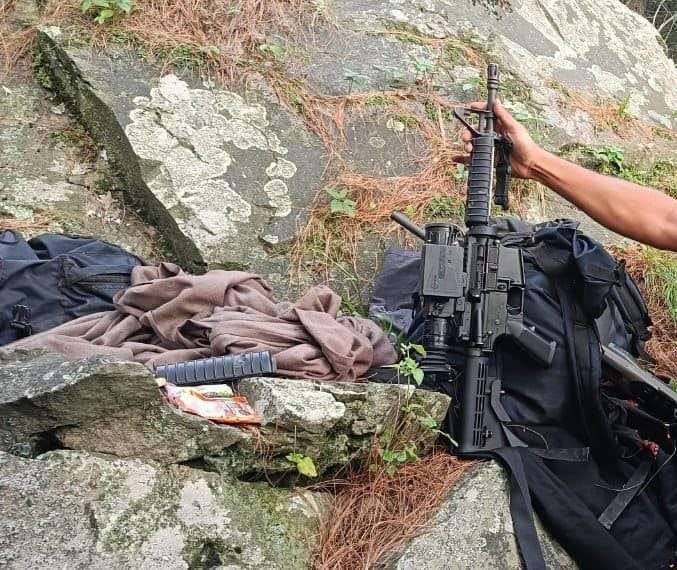
Amjab Ayub Mirza in his tweet says that a full battalion of SSG commandos has infiltrated across the Line of Control (LoC) into India in groups of 50, with two more battalions reportedly awaiting orders on the Pakistani side. This infiltration by elite forces, rather than the usual militants, signals a desperate move by Pakistan to exert control over the region. The recovery of sophisticated weapons like M4 carbines from these attack sites further confirms the involvement of SSG commandos. These advanced weapons are typically used by elite forces and are rarely found with ordinary militants, highlighting the scale of Pakistan’s escalated aggression.
Pakistan’s deployment of such highly trained forces, coupled with the use of advanced weaponry, underscores the fear within Islamabad of losing POJK, especially in light of India’s firm stance and successful counter-terrorism operations in Jammu and Kashmir.
Pakistan’s Fear and Confusion: The Impact of Indian Leadership’s Stance
Pakistan’s recent actions in Jammu and Kashmir can be seen as a direct response to the firm and unwavering stance taken by India’s leadership on the issue of Jammu and Kashmir, including Pakistan-Occupied Jammu and Kashmir (POJK). The pivotal moment came on August 5, 2019, when India’s Home Minister Amit Shah boldly declared, “Not only Jammu and Kashmir is ours, but Pakistan Occupied Kashmir is too ours—we will die for it and we will take it back.” This statement resonated powerfully across the border, sending shockwaves through Pakistan’s political and military establishment. The message was clear: India was not only committed to securing Jammu and Kashmir but also had its sights set on reclaiming POJK.
Prime Minister Narendra Modi further reinforced this resolve following the deadly Pulwama attack, where he vowed to eliminate terrorism from Kashmir once and for all. His words were not just rhetoric; they were backed by decisive action on the ground. India’s sustained counter-terrorism operations, including the Balakot airstrike, have significantly reduced terrorist activities in Kashmir. The drop in local recruitment for militancy over the past few years is a testament to the success of these efforts, signaling a dwindling local support for terrorism.
This shift has put Pakistan in a state of confusion and fear, as the prospect of India extending its reach to reclaim POJK becomes increasingly plausible. Islamabad is now grappling with the real possibility that its long-held control over POJK could be challenged, leading to a sense of desperation that is manifesting in increased aggression and cross-border attacks.
Pakistan’s Strategy: Creating Chaos to Divert Attention
Faced with the potential loss of POJK, Pakistan appears to be employing a strategy aimed at keeping India’s security forces preoccupied within its own borders. By intensifying attacks in Jammu and Kashmir, Pakistan hopes to create a situation where Indian forces are so bogged down by internal security concerns that they are unable to focus on POJK.
To achieve this, Pakistan understands that the usual tactics employed by local militants would no longer suffice. In recent years, these militants have been easily neutralized by Indian forces, often without causing significant casualties. As a result, Pakistan has shifted its strategy, opting to deploy its elite SSG commandos to carry out highly coordinated and lethal attacks. This shift is intended to dominate headlines with news of violence and terror, thereby diverting attention from the issue of POJK.
The infiltration of SSG commandos represents Pakistan’s attempt to escalate the conflict to a level where Indian forces are forced to respond with equal intensity. This tactic, however, reveals Pakistan’s desperation and fear. Rather than engaging in direct confrontation over POJK, Pakistan is trying to draw India into a prolonged internal conflict, hoping to delay any potential action by India to reclaim the region.
The recent attacks have undoubtedly caused grief and anger within India, particularly among those who have lost loved ones in the line of duty. There is a growing sentiment that Pakistan’s actions cannot be allowed to go unanswered. The infiltration of SSG commandos is not just a tactical move by Pakistan; it is a direct challenge to India’s sovereignty and security.
The question that now arises is how India should respond to this provocation. The loss of soldiers and the ongoing threat to national security have led to calls for a more aggressive response. Many believe that if Pakistan is willing to deploy its elite commandos to destabilize India, then India should consider responding in kind.
The notion that “iron cuts iron” is gaining traction, with some advocating for the use of India’s own special forces to target those responsible for the attacks. There is also a call for increased intelligence and surveillance operations to prevent further infiltrations and to neutralize any SSG commandos who have already crossed the LoC.
Pakistan’s Strategy: A Double-Edged Sword
While Pakistan may believe that its current strategy will keep India preoccupied, it is a double-edged sword that could backfire. By escalating the situation, Pakistan risks provoking a stronger and more determined response from India. The Indian government, backed by a public that is increasingly impatient with Pakistan’s provocations, may choose to escalate its own military operations, both within Jammu and Kashmir and potentially beyond the LoC.
Moreover, Pakistan’s actions could further isolate it on the international stage. The use of elite commandos in cross-border operations could be seen as an act of aggression, drawing condemnation from the global community. This, in turn, could lead to increased diplomatic pressure on Pakistan, further weakening its position on the issue of POJK.
At the heart of Pakistan’s actions lies a fundamental fear: the loss of POJK. For decades, Pakistan has maintained control over this region, using it as a base for launching attacks and promoting separatism in Jammu and Kashmir. However, the changing dynamics in the region, coupled with India’s assertive stance, have made Pakistan’s hold on POJK increasingly tenuous.
The abrogation of Article 370 and the subsequent integration of Jammu and Kashmir into the Indian Union have further complicated Pakistan’s position. The success of India’s counter-terrorism operations and the diminishing influence of separatist elements in Kashmir have weakened Pakistan’s ability to justify its claims over POJK.
The fear of losing POJK has forced Pakistan to resort to desperate measures, including the deployment of SSG commandos. However, these actions may only serve to accelerate the very outcome Pakistan fears. If India decides to take decisive action to reclaim POJK, Pakistan’s current strategy could prove to be its undoing.
Pakistan’s recent actions in Jammu and Kashmir are a clear indication of its confusion and fear of losing POJK. The deployment of SSG commandos and the escalation of attacks in the region are desperate attempts to divert India’s attention and to keep its forces preoccupied. However, these actions also reveal Pakistan’s vulnerabilities and the growing threat it faces from a more confident and assertive India.
For India, the path forward requires both vigilance and resolve. The recent attacks have underscored the need for enhanced security measures, intelligence gathering, and a willingness to respond decisively to any threats. At the same time, India must remain focused on its long-term goal: the peaceful and lawful reclamation of POJK.
In the end, Pakistan’s fear and confusion may prove to be its greatest weakness. As India continues to strengthen its position in Jammu and Kashmir, the day may come when Pakistan is forced to confront the reality of losing POJK—a reality that no amount of SSG commandos or cross-border attacks can prevent.In recent months, the security situation in Jammu and Kashmir has seen a sharp escalation, particularly in areas that had been largely free from militant activities for over a decade. The resurgence of terror attacks, especially in the Jammu region, has raised alarm bells within India’s security establishment. These attacks, marked by their precision and the use of sophisticated weaponry, have resulted in the deaths of several Indian soldiers, leading to concerns that Pakistan, driven by fear and confusion, is attempting to destabilize the region to retain control over Pakistan-Occupied Jammu and Kashmir (POJK).
July has been particularly challenging for India’s security forces, with nine casualties reported in the first three weeks alone. This sudden spike in violence is especially troubling given that the region had been declared “militancy-free” some 15 years ago. The casualty count for 2024 is rapidly approaching the total number of deaths recorded in all of 2023, with attacks occurring not only in the traditionally volatile areas of Poonch and Rajouri but also in Kathua, Udhampur, Doda, and now even in South Kashmir.
The latest incidents, including the killing of two soldiers in the Gadole area of South Kashmir and the death of an army captain in Assar, Doda, have further underscored the seriousness of the threat. What is particularly concerning is the level of planning and execution involved in these attacks. Unlike the sporadic and poorly coordinated assaults carried out by local militants in the past, these recent attacks appear to be meticulously planned and executed with military precision, resulting in minimal casualties among the attackers themselves.
The Involvement of Pakistan’s Elite SSG Commandos
According to credible sources within the Indian security apparatus, the recent wave of attacks in Jammu and Kashmir is not the work of ordinary militants but is being carried out by Pakistan’s elite Special Service Group (SSG) commandos. The SSG is highly trained, skilled in covert operations, and their involvement marks a significant escalation in Pakistan’s strategy to destabilize the region. This shift is driven by Islamabad’s growing anxiety over potentially losing control of Pakistan-Occupied Jammu and Kashmir (POJK).
Amjab Ayub Mirza in his tweet says that a full battalion of SSG commandos has infiltrated across the Line of Control (LoC) into India in groups of 50, with two more battalions reportedly awaiting orders on the Pakistani side. This infiltration by elite forces, rather than the usual militants, signals a desperate move by Pakistan to exert control over the region. The recovery of sophisticated weapons like M4 carbines from these attack sites further confirms the involvement of SSG commandos. These advanced weapons are typically used by elite forces and are rarely found with ordinary militants, highlighting the scale of Pakistan’s escalated aggression.
Pakistan’s deployment of such highly trained forces, coupled with the use of advanced weaponry, underscores the fear within Islamabad of losing POJK, especially in light of India’s firm stance and successful counter-terrorism operations in Jammu and Kashmir.
Pakistan’s Fear and Confusion: The Impact of Indian Leadership’s Stance
Pakistan’s recent actions in Jammu and Kashmir can be seen as a direct response to the firm and unwavering stance taken by India’s leadership on the issue of Jammu and Kashmir, including Pakistan-Occupied Jammu and Kashmir (POJK). The pivotal moment came on August 5, 2019, when India’s Home Minister Amit Shah boldly declared, “Not only Jammu and Kashmir is ours, but Pakistan Occupied Kashmir is too ours—we will die for it and we will take it back.” This statement resonated powerfully across the border, sending shockwaves through Pakistan’s political and military establishment. The message was clear: India was not only committed to securing Jammu and Kashmir but also had its sights set on reclaiming POJK.
Prime Minister Narendra Modi further reinforced this resolve following the deadly Pulwama attack, where he vowed to eliminate terrorism from Kashmir once and for all. His words were not just rhetoric; they were backed by decisive action on the ground. India’s sustained counter-terrorism operations, including the Balakot airstrike, have significantly reduced terrorist activities in Kashmir. The drop in local recruitment for militancy over the past few years is a testament to the success of these efforts, signaling a dwindling local support for terrorism.
This shift has put Pakistan in a state of confusion and fear, as the prospect of India extending its reach to reclaim POJK becomes increasingly plausible. Islamabad is now grappling with the real possibility that its long-held control over POJK could be challenged, leading to a sense of desperation that is manifesting in increased aggression and cross-border attacks.
Pakistan’s Strategy: Creating Chaos to Divert Attention
Faced with the potential loss of POJK, Pakistan appears to be employing a strategy aimed at keeping India’s security forces preoccupied within its own borders. By intensifying attacks in Jammu and Kashmir, Pakistan hopes to create a situation where Indian forces are so bogged down by internal security concerns that they are unable to focus on POJK.
To achieve this, Pakistan understands that the usual tactics employed by local militants would no longer suffice. In recent years, these militants have been easily neutralized by Indian forces, often without causing significant casualties. As a result, Pakistan has shifted its strategy, opting to deploy its elite SSG commandos to carry out highly coordinated and lethal attacks. This shift is intended to dominate headlines with news of violence and terror, thereby diverting attention from the issue of POJK.
The infiltration of SSG commandos represents Pakistan’s attempt to escalate the conflict to a level where Indian forces are forced to respond with equal intensity. This tactic, however, reveals Pakistan’s desperation and fear. Rather than engaging in direct confrontation over POJK, Pakistan is trying to draw India into a prolonged internal conflict, hoping to delay any potential action by India to reclaim the region.
The recent attacks have undoubtedly caused grief and anger within India, particularly among those who have lost loved ones in the line of duty. There is a growing sentiment that Pakistan’s actions cannot be allowed to go unanswered. The infiltration of SSG commandos is not just a tactical move by Pakistan; it is a direct challenge to India’s sovereignty and security.
The question that now arises is how India should respond to this provocation. The loss of soldiers and the ongoing threat to national security have led to calls for a more aggressive response. Many believe that if Pakistan is willing to deploy its elite commandos to destabilize India, then India should consider responding in kind.
The notion that “iron cuts iron” is gaining traction, with some advocating for the use of India’s own special forces to target those responsible for the attacks. There is also a call for increased intelligence and surveillance operations to prevent further infiltrations and to neutralize any SSG commandos who have already crossed the LoC.
Pakistan’s Strategy: A Double-Edged Sword
While Pakistan may believe that its current strategy will keep India preoccupied, it is a double-edged sword that could backfire. By escalating the situation, Pakistan risks provoking a stronger and more determined response from India. The Indian government, backed by a public that is increasingly impatient with Pakistan’s provocations, may choose to escalate its own military operations, both within Jammu and Kashmir and potentially beyond the LoC.
Moreover, Pakistan’s actions could further isolate it on the international stage. The use of elite commandos in cross-border operations could be seen as an act of aggression, drawing condemnation from the global community. This, in turn, could lead to increased diplomatic pressure on Pakistan, further weakening its position on the issue of POJK.
At the heart of Pakistan’s actions lies a fundamental fear: the loss of POJK. For decades, Pakistan has maintained control over this region, using it as a base for launching attacks and promoting separatism in Jammu and Kashmir. However, the changing dynamics in the region, coupled with India’s assertive stance, have made Pakistan’s hold on POJK increasingly tenuous.
The abrogation of Article 370 and the subsequent integration of Jammu and Kashmir into the Indian Union have further complicated Pakistan’s position. The success of India’s counter-terrorism operations and the diminishing influence of separatist elements in Kashmir have weakened Pakistan’s ability to justify its claims over POJK.
The fear of losing POJK has forced Pakistan to resort to desperate measures, including the deployment of SSG commandos. However, these actions may only serve to accelerate the very outcome Pakistan fears. If India decides to take decisive action to reclaim POJK, Pakistan’s current strategy could prove to be its undoing.
Pakistan’s recent actions in Jammu and Kashmir are a clear indication of its confusion and fear of losing POJK. The deployment of SSG commandos and the escalation of attacks in the region are desperate attempts to divert India’s attention and to keep its forces preoccupied. However, these actions also reveal Pakistan’s vulnerabilities and the growing threat it faces from a more confident and assertive India.
For India, the path forward requires both vigilance and resolve. The recent attacks have underscored the need for enhanced security measures, intelligence gathering, and a willingness to respond decisively to any threats. At the same time, India must remain focused on its long-term goal: the peaceful and lawful reclamation of POJK.
In the end, Pakistan’s fear and confusion may prove to be its greatest weakness. As India continues to strengthen its position in Jammu and Kashmir, the day may come when Pakistan is forced to confront the reality of losing POJK—a reality that no amount of SSG commandos or cross-border attacks can prevent.


 Sheikh Sameer