The Kashmir Dialogues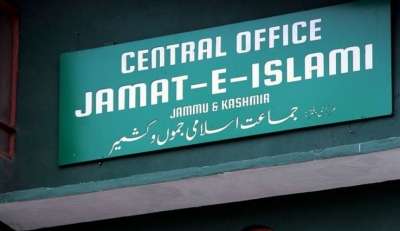
The Risks of Welcoming Jamaat-e-Islami Back into the Fold
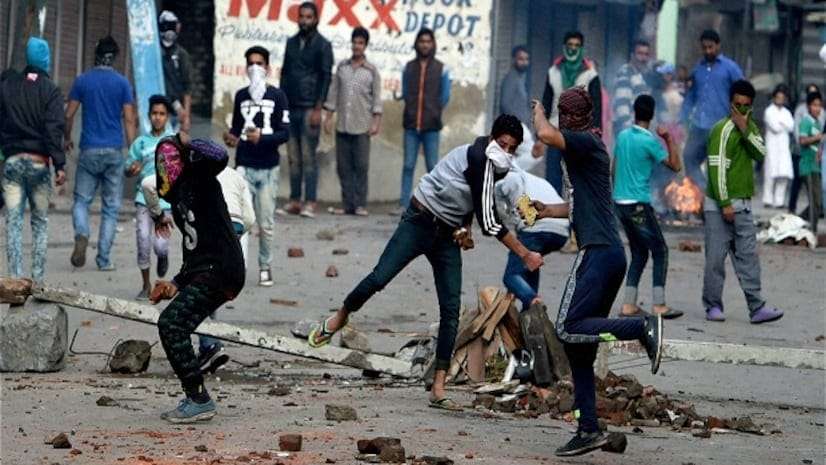
Have we ever paused to consider the immense toll that three decades of violence have taken on Kashmir, and who has been behind it? This period of unrest might well be considered an era in itself. A closer examination of the consequences of this violence reveals a disturbing picture. Over the last thirty years, Kashmir has experienced repeated bouts of turmoil, each time resulting in significant losses—be they economic, financial, educational, or human. The people of Kashmir have borne the brunt of this ongoing struggle.
To illustrate just a fraction of this impact, consider the financial losses incurred during the turmoil of 2016, following the death of Hizbul Mujahideen commander Burhan Wani. During the five months of turmoil Kashmir has suffered losses estimated to over Rs 16000 crore.
According to the Economic Survey 2016, tabled by Minister for Finance Haseeb Drabu in the Jammu and Kashmir Assembly, the losses incurred due to the unrest from July 8 to November 30, 2016, are estimated at over Rs. 16,000 crore. The chapter titled “Economies of Uncertainty and Conflict” highlighted that the civil strife of 2016 brought tremendous misery, loss of life, and a complete halt to economic activities in the Valley, alongside property damage amounting to crores of rupees.
The data reveals the immense cost Kashmir endured in just five months of turmoil. When we consider the three decades of violence and terrorism, largely fueled by groups like Jamaat-e-Islami, the scale of loss becomes even more profound. The root of this devastation can be traced back to Jamaat-e-Islami’s actions, particularly their support for militant groups in response to their political defeat in the 1987 elections. The group’s alliance with Hizbul Mujahideen led to widespread violence, claiming thousands of innocent lives and disrupting the region’s socio-economic fabric.
Jamaat-e-Islami Kashmir began as an offshoot of the Jamaat-e-Islami movement, founded by Maulana Abul A’la Maududi. Initially focused on promoting Islamic values and social justice, the organization gradually became more politically inclined. By the late 1980s, it had shifted its focus towards the secession of Jammu and Kashmir from India and its accession to Pakistan, marking a significant departure from its original mission. This shift set the stage for a series of events that would plunge Kashmir into decades of violence and instability.
In 1989, Jamaat-e-Islami Kashmir openly supported militant insurgency, forming alliances with armed groups like Hizbul Mujahideen. This marked the beginning of a brutal conflict that would claim thousands of lives and cause immense suffering. The organization’s logistical support, recruitment drives, and ideological indoctrination fueled the insurgency, leading to widespread violence and chaos.
The rebellion led by Jamaat-e-Islami Kashmir had catastrophic consequences. The violence resulted in the deaths of tens of thousands of people, including civilians, security personnel, and militants. Political leaders who opposed the insurgency or advocated for peace were targeted and assassinated, creating a climate of fear and instability. The conflict also caused widespread human rights abuses, displacement, and economic devastation, leaving lasting scars on the region.
In 2019, after the CRPF convoy was blasted by a suicide bomber the Indian government, in an effort to restore order and curb the organization’s influence, imposed a ban on Jamaat-e-Islami Kashmir under the Unlawful Activities (Prevention) Act (UAPA). This decision was seen as a necessary measure to prevent further support for militancy and secessionist activities. The ban led to the arrest of many of the organization’s leaders, the seizure of its properties, and a significant reduction in its operational capacity. Despite this, the legacy of Jamaat-e-Islami’s role in the insurgency continues to loom large over Kashmir.
Recent reports suggest that the Indian government may consider lifting the ban on Jamaat-e-Islami Kashmir, potentially allowing the organization to contest elections. Allowing a group with a history of supporting terror activities, advocating secession, and fostering a sense of alienation from mainland India into the political process could be disastrous. The organization’s constitution and ideological stance remain fundamentally opposed to the Indian constitution, raising serious questions about its role in a democratic setup.
The release of four top leaders of Jamaat-e-Islami Kashmir, including its head Dr. Fayaz Hamid, has added fuel to the speculation about the organization’s future. Reports indicate that these leaders have suggested changes in the organization’s constitution and expressed intentions to participate in the Union Territory’s first Assembly elections. This move could signal a significant shift in the political landscape of Kashmir.
If these reports are accurate, it appears that the stage is being set for revoking the ban on Jamaat-e-Islami Kashmir and facilitating the party’s participation in the Assembly elections. The organization, which has been a pro-Pakistan and anti-India voice for decades, could either contest the elections directly or support other parties. This scenario is reminiscent of the recent Lok Sabha elections in North Kashmir, where the jailed independent candidate Engineer Rashid emerged as the beneficiary of the “sentiment vote” and defeated candidates from established parties like the National Conference (NC), Peoples Democratic Party (PDP), and Peoples Conference (PC). The involvement of Jamaat-e-Islami leaders in recent elections, coupled with calls from political figures like former Chief Minister Omar Abdullah for the revocation of the ban, reflects a complex and contentious issue.
Some analysts may argue that lifting the ban could be seen as an attempt to integrate Jamaat-e-Islami into the political mainstream, addressing the alienation felt by locals after the abrogation of Article 370. However, history shows that Jamaat-e-Islami has previously made superficial amendments to its constitution to lift bans, only to revert to its original stance once restrictions were lifted. This pattern suggests that any current changes might be temporary and strategic.
To understand the potential impact of lifting the ban on Jamaat-e-Islami Kashmir, it’s essential to examine the organization’s historical involvement in Kashmir’s political and militant activities. Before the outbreak of militancy in 1989, Jamaat-e-Islami contested Lok Sabha elections from 1967 to 1984, albeit unsuccessfully. It also participated in the Assembly elections of 1972 and won five seats in Kashmir. In 1977, it secured one seat (Sopore, held by Syed Ali Shah Geelani). However, by 1983, it failed to win any seats and contested its last Assembly elections in 1987 under the umbrella of the Muslim United Front (MUF). Of the four MUF winners, three were from Jamaat-e-Islami. All four resigned in 1989, signaling the start of an armed insurgency that would see Jamaat-e-Islami dispute Jammu and Kashmir’s accession to India and support the armed struggle.
Allowing Jamaat-e-Islami Kashmir to participate in elections could have far-reaching consequences. The organization has a long history of supporting terror activities and promoting secessionism, which could undermine the region’s fragile peace.
Additionally, Jamaat-e-Islami’s constitution advocates for an Islamic state governed by Sharia law, directly conflicting with India’s secular and democratic principles. Historically, Jamaat-e-Islami has temporarily amended its constitution to avoid bans, only to revert to its original stance once the threat subsides.
Allowing Jamaat-e-Islami to participate in elections, despite potential amendments to its constitution, poses significant risks. The organization’s history indicates that any democratic alignment might be temporary, with a persistent core opposition to the Indian constitution. Once integrated into the political framework, Jamaat-e-Islami could revert to its original stance, undermining the democratic process and fostering conflict. This creates a conflict of interest, as a political entity within the democratic framework might actively seek to dismantle that very framework, challenging governance, lawmaking, and the integrity of democracy.
Moreover, Jamaat-e-Islami has played a pivotal role in fostering a sense of alienation among Kashmiris and advocating for secession from India. Its ideological stance and actions have historically created a deep divide between the people of Kashmir and the rest of the country, promoting sentiments of separatism and discord. By consistently pushing an agenda that undermines the sovereignty and unity of India, Jamaat-e-Islami has contributed to the prolonged conflict and instability in the region. Integrating such an organization into the political process could reignite old tensions and lead to further unrest. The potential for Jamaat-e-Islami to exploit the democratic framework to advance its secessionist agenda cannot be overlooked. This move could undermine the efforts made towards peace and reconciliation, destabilizing the region once again. The risk of renewed violence and the resurgence of anti-national activities are significant concerns that must be carefully considered before making any decisions regarding the organization’s political participation.
The organization’s involvement in the insurgency and its role in anti-election campaigns have left deep scars on the region, resulting in widespread violence, loss of life, and prolonged instability. Allowing Jamaat-e-Islami to participate in elections could be perceived as a reward for its past activities, sending a negative message to those who have worked tirelessly towards peace. This decision could undermine the sacrifices made by countless individuals who have sought to bring stability and harmony to Kashmir. Moreover, it risks reigniting old tensions and reversing the progress made in recent years. The inclusion of such an organization in the political process may embolden other groups with similar ideologies, threatening the fragile peace and unity in the region.
The decision to lift the ban on Jamaat-e-Islami Kashmir and allow it to participate in elections may be a good step but it requires a careful assessment of the potential risks and benefits, taking into account the organization’s history, ideology, and impact on the region. The government must weigh the need for reconciliation and dialogue against the risk of reigniting old conflicts and undermining the region’s fragile peace.
The story of Jamaat-e-Islami Kashmir is a cautionary tale of how ideological fervor can lead to devastating consequences. The organization’s support for armed rebellion resulted in immense suffering and loss. As the government contemplates its future actions, it must carefully weigh the potential benefits of political reintegration against the risks of reviving old conflicts. The hope is that any decision will prioritize the long-term peace and prosperity of Kashmir, ensuring that the valley does not once again descend into the shadows of rebellion.
The potential lifting of the ban on Jamaat-e-Islami Kashmir and its participation in elections could mark a significant shift in the region’s political landscape. However, it is a decision that must be approached with caution and careful consideration of the broader implications for peace and stability in Kashmir. The valley stands at a crossroads, and the path chosen will shape its future for years to come.


 Sheikh Sameer