The Kashmir Dialogues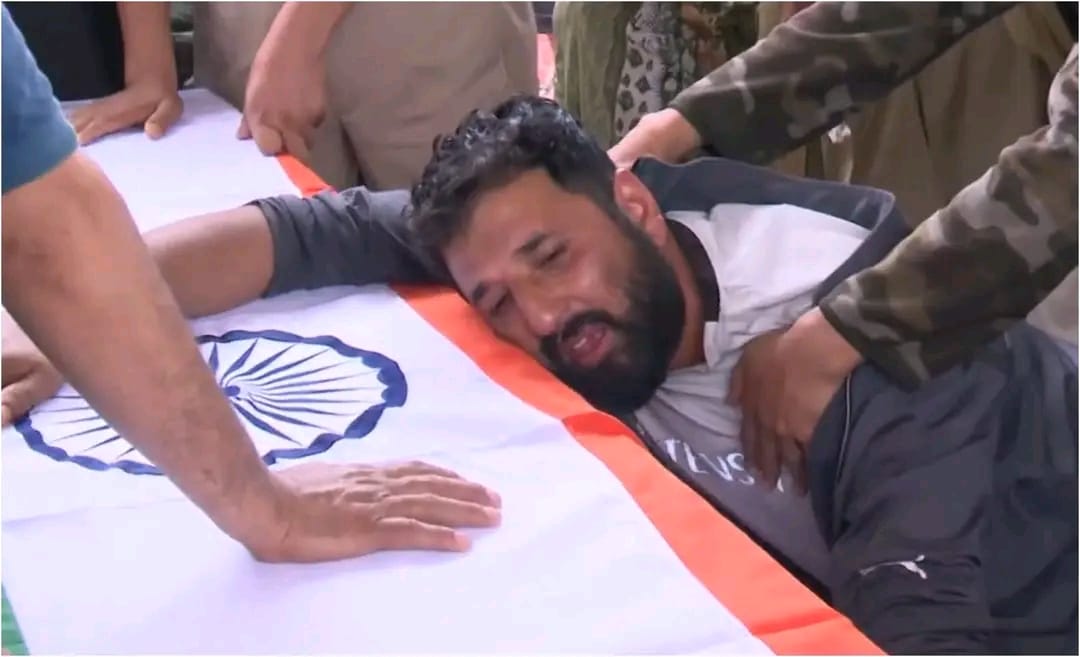
The sound of a single bullet in Anantnag did not merely claim the life of a police constable. It shattered the peace of a family, reopened old wounds in Kashmir, and reminded us yet again that in this land, tragedy is seldom allowed to remain just that—a tragedy.
Somewhere today, a mother is staring at a door that will never again open for her son. A wife is trying to gather the strength to answer questions she herself cannot bear.
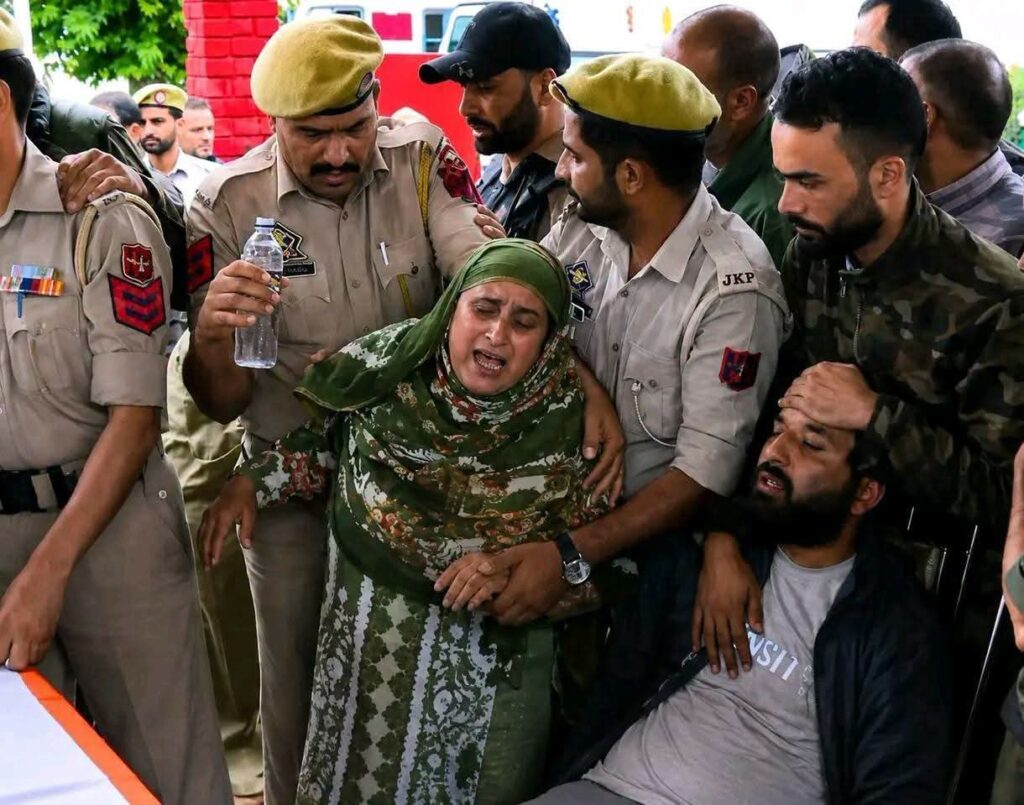
A child will grow up carrying memories instead of moments. Behind every uniform is a human being with dreams, responsibilities, and loved ones waiting at home.
The slain policeman was not merely a government employee. He was a son of Kashmir, entrusted with protecting lives during one of the most significant annual events in the Valley—the Amarnath Yatra. While thousands of pilgrims travelled in faith and thousands of Kashmiris worked tirelessly to welcome and assist them, he stood on duty, knowing that the uniform often demands the ultimate sacrifice.
Sadly, that sacrifice became his destiny.
His death deserves mourning before it becomes a matter of politics. Yet in today’s world, grief barely gets a chance to breathe before it is overtaken by competing narratives.
Within hours of the attack, social media platforms were flooded with interpretations, assumptions, opinions and theories. Some linked the timing of the incident to the ongoing discussion surrounding the restoration of Jammu and Kashmir’s statehood. Others viewed it through the lens of the Amarnath Yatra, arguing that such attacks seek to create fear and undermine the sense of normalcy that has gradually returned to the Valley. Many questioned security arrangements. Others blamed political actors.
The speed with which people arrive at conclusions has become almost as alarming as the violence itself.
Perhaps this reflects the deep mistrust that decades of conflict have left behind. Kashmir has lived through enough uncertainty that every major incident is immediately viewed through multiple political, social and security lenses. People naturally search for explanations that fit their own experiences, beliefs or fears. But in doing so, there is a danger that the victim’s humanity gets lost beneath the noise.
The reality is that investigations—not timelines, hashtags or viral posts—must establish the truth. Responsible journalism and responsible citizenship require patience while evidence is gathered. Questions are necessary in any democracy, but answers must come from facts, not assumptions.
What remains beyond dispute is the enormous cost that violence imposes on ordinary Kashmiris.
Every terror attack sets back the hopes of thousands who have worked hard to project a different image of Kashmir. It affects tourism, local businesses, transporters, hoteliers, guides, artisans and countless families whose livelihoods depend on peace. It casts a shadow over the hospitality that local people have once again extended to Amarnath pilgrims. It also risks shifting public discourse away from aspirations for democratic progress and development towards renewed concerns about security.
This is why every act of terror hurts far more people than its immediate victims.
For years, Kashmiris have longed to be known for their breathtaking landscapes, their culture, their resilience and their warmth—not for headlines of bloodshed. Every life lost to violence pushes that dream a little further away.
The fallen policeman should not become merely another statistic, nor should his memory become a tool in arguments that divide society further. He was first and foremost a human being—a son, perhaps a husband, perhaps a father, a colleague, a friend—whose family now carries a grief that no public debate can ease.
As discussions continue around Kashmir’s future—whether about development, democracy, security or the restoration of statehood—one principle should unite us all: no political objective is served by the loss of innocent lives. Violence only deepens wounds that generations have struggled to heal.
There will always be competing narratives. There will always be those who interpret every incident differently. That is the nature of a deeply contested region. But before we choose a narrative, we must first remember the name of the man whose life was lost.
May the Almighty grant eternal peace to the departed soul, patience and strength to his bereaved family, and wisdom to all those entrusted with leading Jammu and Kashmir towards lasting peace.
In the end, history will remember many arguments about this attack. But one family will remember only the man who never came home.


 Sheikh Sameer